
Clam chowder recipe searches usually come down to one problem: you want that creamy, cozy bowl without the fuss, the pastey texture, or the “why is this watery?” disappointment.
This guide keeps it practical, a short ingredient list, clear steps, and the little choices that make chowder taste like something you’d order out. You’ll also get a few flexible options for bacon, thickening, and clams so you can work with what’s in your pantry.
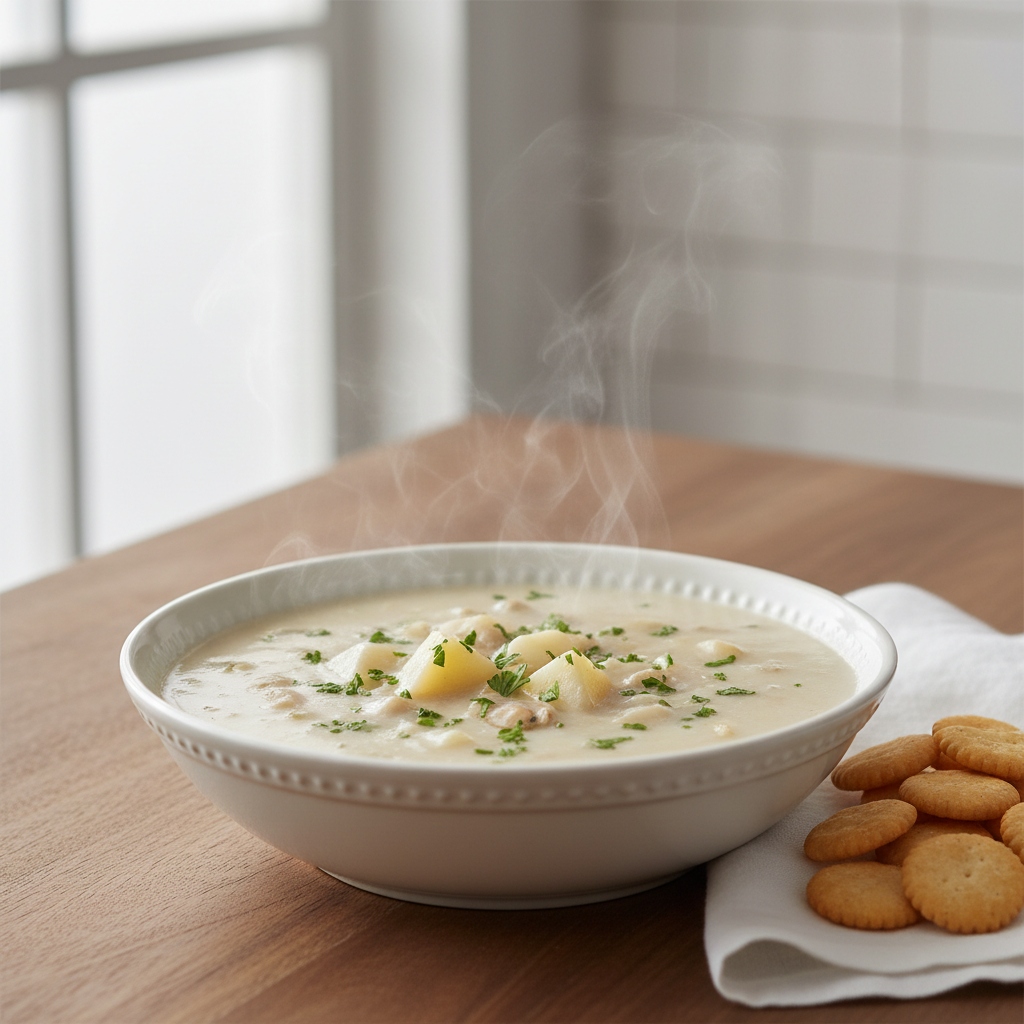
Quick note before we start, chowder gets tricky when heat and dairy move too fast, so we’ll talk about how to keep it smooth, and how to fix it if it starts to split. According to USDA FoodSafety.gov, seafood should be cooked to a safe internal temperature, and leftovers should be cooled and refrigerated promptly, so treat that part seriously even if the recipe feels casual.
What makes an “easy creamy” clam chowder actually work
Most home versions fail for predictable reasons, not because the cook lacks skill, the steps just get rushed. Creamy chowder is more about sequence than fancy ingredients.
- Flavor base first: onion, celery, and a little fat build the backbone, skipping this often tastes flat.
- Starch control: potatoes thicken, flour can help, but too much turns gluey.
- Dairy at the end: cream and milk dislike high heat, gentle simmer keeps it silky.
- Clams last-minute: clams go rubbery when boiled hard, warm them through instead.
If you remember one thing, keep the pot at a lazy simmer once dairy shows up, no aggressive boiling.
Ingredients: the simple list (plus smart swaps)
This is a classic New England-style approach, creamy, not tomato-based. If you want it richer or lighter, use the swaps without rewriting the whole plan.
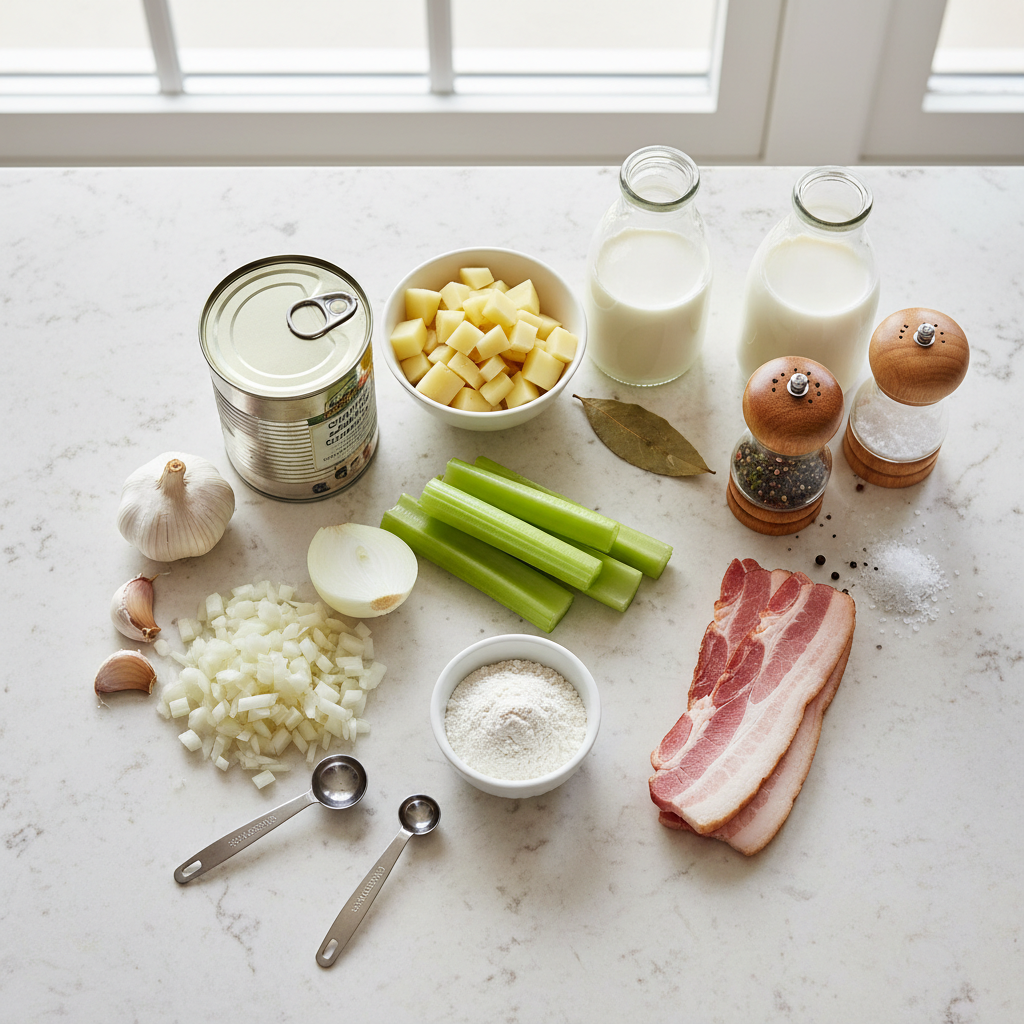
Core ingredients
- 4 slices bacon, chopped (or 2 tbsp butter if skipping bacon)
- 1 medium yellow onion, diced
- 2 celery stalks, diced
- 2 cloves garlic, minced
- 2 tbsp all-purpose flour
- 2 cups chicken broth or clam juice
- 2 cups peeled diced potatoes (Yukon Gold or russet)
- 1 bay leaf
- 1 tsp kosher salt (adjust later) + black pepper
- 2 (6.5-oz) cans chopped clams, with juice (or 12–16 oz fresh clams, see notes)
- 1 cup heavy cream
- 1 cup whole milk
- Optional: 1–2 tsp lemon juice, chopped parsley, oyster crackers
Swaps that usually work
- No heavy cream: use half-and-half, it may be slightly less rich.
- Gluten-free: skip flour, then mash more potato, or use a cornstarch slurry at the end.
- No bacon: butter plus a pinch of smoked paprika gives some of that smoky vibe.
- Clam juice shortage: use chicken broth, then add a little extra clam can juice for “sea” flavor.
Step-by-step: an easy clam chowder recipe you can repeat
This method aims for creamy and thick, but not heavy. Read once, then cook, it moves quickly once the potatoes soften.
1) Build the base
- In a Dutch oven or heavy pot, cook bacon on medium heat until crisp, 6–8 minutes.
- Scoop bacon out, leave about 2 tbsp drippings in the pot.
- Add onion and celery, cook until soft and translucent, about 5 minutes.
- Add garlic, cook 30 seconds, just until fragrant.
2) Thicken without turning it gummy
- Sprinkle flour over the vegetables, stir for 1 minute so it cooks off the raw taste.
- Slowly pour in broth or clam juice, stirring to avoid lumps.
3) Cook potatoes to the right texture
- Add potatoes, bay leaf, salt, and a few grinds of pepper.
- Bring to a gentle boil, then lower to a simmer, cook 12–15 minutes until potatoes are tender.
4) Add dairy gently, then clams
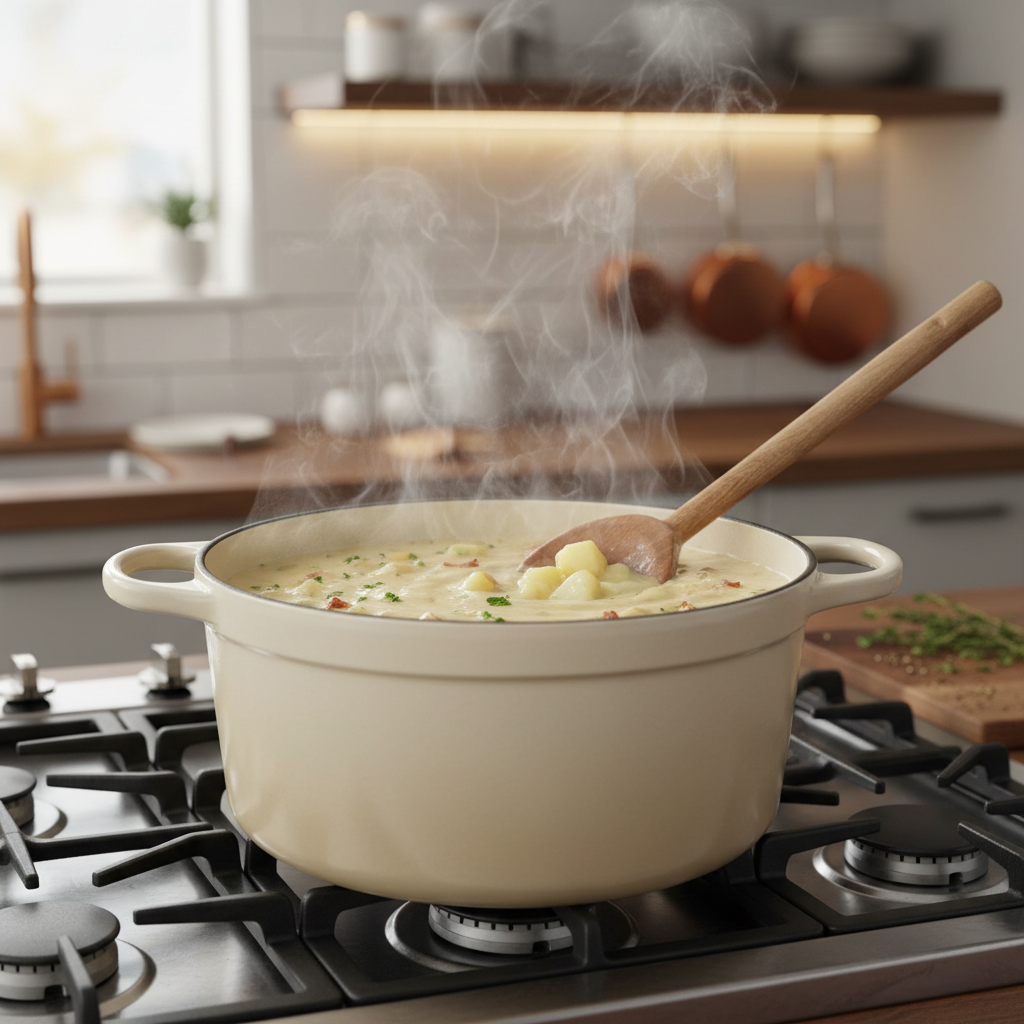
- Lower heat, stir in cream and milk, keep it at a gentle simmer, not a hard boil.
- Stir in clams with their juice, warm 2–3 minutes.
- Taste, then adjust salt, pepper, and a small squeeze of lemon if it feels too “flat.”
Finish with bacon on top and parsley if you want it to look like you tried harder than you did.
Texture and flavor troubleshooting (the stuff people actually Google)
This is where most “easy” recipes skip details, but these fixes save dinner.
- Too thin: mash some potatoes against the pot wall, simmer 5 minutes; or whisk 1 tbsp cornstarch with 2 tbsp cold water, add slowly while simmering.
- Too thick: add a splash of broth or milk, warm gently, then re-check salt.
- Grainy or split: heat was likely too high after dairy, pull off heat, whisk, then gently warm; in stubborn cases, blending a small portion can help smooth it.
- Not enough clam flavor: add a bit more clam can juice, or a small pinch of Old Bay, but go light so it doesn’t taste like seasoning salt.
- Too salty: add more potato and simmer, or dilute with unsalted broth, cream alone can make it taste richer but won’t always fix salt.
Quick self-check: which chowder style are you making?
Before you tweak anything, decide what “creamy” means to you, because the fix depends on the target.
- Spoon-coating thick: you want roux plus a little potato mash, great for bread bowls.
- Light but creamy: lean more on potato starch, use milk plus a smaller splash of cream.
- Extra rich: more cream, more bacon fat, but watch heat or it can split.
- Chunky vs smooth: chunky needs evenly diced potatoes; smoother benefits from blending 1 cup then stirring back in.
If you’re cooking for mixed preferences, keep it chunkier, it reads “homemade” and forgives small texture imperfections.
Make-ahead, storage, and reheating (without wrecking the cream)
Clam chowder reheats well if you treat it like a sauce, slow and gentle. According to USDA FoodSafety.gov, leftovers should be refrigerated within 2 hours, and reheated until hot throughout, if you are serving someone at higher risk, consider more cautious handling and consult a professional for tailored advice.
- Make-ahead move: cook the base through potatoes, cool, then add dairy and clams when reheating for best texture.
- Fridge: store in a sealed container, commonly 2–3 days is a practical window for seafood dishes.
- Freezer: cream-based soups can separate, some people still freeze it and whisk hard when reheating, but expect texture changes.
- Reheat: low heat, stir often, avoid boiling.
Handy table: common substitutions and what changes
When you’re mid-cook, you don’t want a lecture, you want quick trade-offs that won’t ruin the pot.
| If you swap… | Use this | What to expect |
|---|---|---|
| Heavy cream | Half-and-half | Still creamy, slightly lighter, more sensitive to high heat |
| Bacon | Butter + smoked paprika | Less meaty depth, but good smoky illusion |
| Flour thickener | Potato mash or cornstarch slurry | Cleaner taste, but slurry can feel glossy if overused |
| Canned clams | Fresh clams | Brighter flavor, more steps, strain broth to avoid grit |
| Chicken broth | Clam juice | More “coastal” flavor, can taste salty, adjust seasoning late |
Key takeaways before you start cooking
- Don’t boil after dairy, keep it at a gentle simmer for a smooth finish.
- Use potatoes as your safety net, they thicken naturally and fix thin chowder fast.
- Add clams at the end, warm them through, then stop touching it.
- Season late, especially if you use clam juice or salty bacon.
Conclusion: a creamy chowder you can make on a weeknight
A reliable clam chowder recipe isn’t about being fancy, it’s about timing: build flavor first, cook potatoes until tender, then keep the heat gentle once dairy and clams go in.
If you want an easy next step, cook it once exactly as written, then on round two tweak one variable only, a little more potato mash for thickness, or a touch more clam juice for ocean flavor, and you’ll dial it in fast.
FAQ
How do I make this clam chowder recipe thicker without adding more flour?
Mash a cup of the cooked potatoes right in the pot, then simmer a few minutes. It thickens naturally and keeps the chowder tasting clean, not bready.
Can I use fresh clams instead of canned?
Yes, though it adds steps. Steam clams until they open, chop meat, then strain the cooking liquid through a fine mesh to catch any grit before adding it to the soup.
Why did my chowder curdle or look grainy?
Heat usually ran too high after milk or cream went in. Pull it off heat, whisk, then warm slowly; for future batches, keep it at a gentle simmer and avoid boiling.
Is it okay to make clam chowder ahead for a party?
It can work well if you cook the soup through the potato stage ahead, then add dairy and clams when reheating. That approach reduces the chance of overcooked clams and split cream.
What potatoes are best for creamy chowder?
Yukon Gold gives a naturally creamy texture and holds shape well. Russet breaks down more, which is handy if you like thicker chowder without extra thickeners.
Can I make it lighter without losing the “creamy” feel?
Use more milk and less cream, and lean on potato mash for body. You’ll still get a creamy texture, just less richness.
What should I serve with clam chowder?
Oyster crackers, a simple green salad, or a crusty sourdough work well. If you’re doing bread bowls, keep the chowder thicker so it doesn’t soak through too fast.
If you’re trying to build a small “repeatable” dinner rotation, this clam chowder recipe is a good one to keep, it scales easily, it’s forgiving, and once you learn the low-heat dairy rule, weeknight comfort food gets a lot simpler.