
The best chocolate cake recipe moist fudgy usually comes down to a few unsexy details: the right cocoa, enough fat and liquid, controlled mixing, and not overbaking by “just a couple minutes.” If you want a cake that stays plush on day two, slices cleanly, and tastes deeply chocolatey instead of merely sweet, you’re in the right place.
This is also one of those recipes where tiny choices matter more than fancy techniques, like what kind of cocoa you buy, whether your coffee is hot, and how you measure flour. People often blame “the recipe” when the real issue is mixing order, pan size, or oven drift.
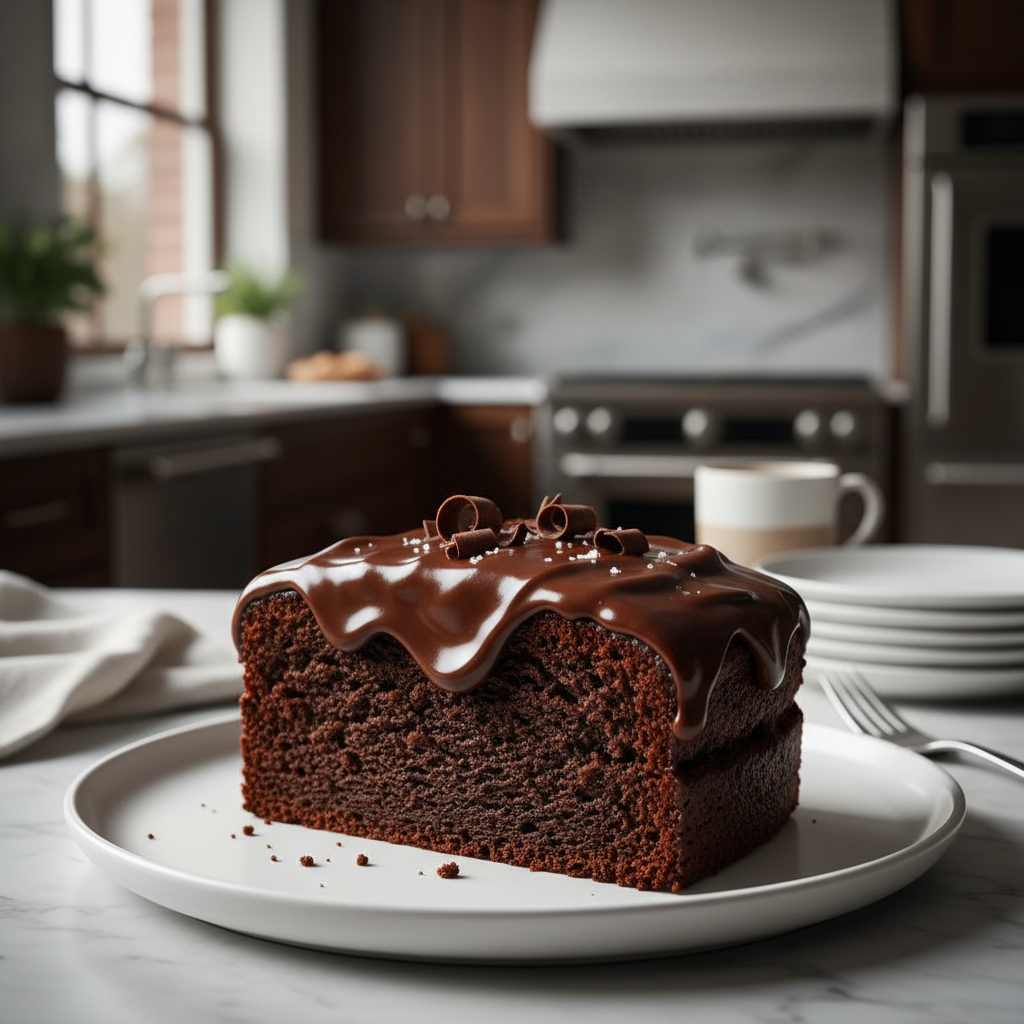
I’ll walk you through a reliable base cake, practical swaps, and a few “save it” fixes if your cake ever comes out dry, sunken, or crumbly. You’ll also get doneness cues that work better than guessing time on the timer.
What “moist and fudgy” actually means in a chocolate cake
People use “fudgy” loosely, so let’s pin it down. In cake terms, fudgy usually means a tight, velvety crumb with enough moisture that it feels almost brownie-adjacent, but still lifts like cake.
- Moist comes from liquid plus fat (and keeping it in the cake by not overbaking).
- Fudgy comes from higher cocoa solids, more sugar for tenderness, and often a bit of hot liquid to bloom cocoa.
- Chocolate-forward comes from cocoa quality, a pinch of salt, and sometimes coffee to amplify flavor without making it taste like coffee.
According to USDA FoodData Central... cocoa powder is naturally low in fat unless it’s Dutch-processed with different treatments, so when a cake tastes “dry,” it’s often because the recipe doesn’t compensate with enough oil, sour cream, or similar moisture insurance.
Why chocolate cakes turn out dry (and how this recipe avoids it)
Most dry chocolate cake problems show up in the same handful of places, and they’re fixable once you know what you’re looking at.
Common causes in real kitchens
- Too much flour from scooping directly with the measuring cup. Spoon and level, or use a scale.
- Overbaking because chocolate cakes look underdone longer than vanilla cakes.
- Low-fat substitutions (nonfat yogurt, reduced oil) that remove what keeps crumb tender.
- Wrong pan size that changes bake time and dries edges.
- Old leavening (baking powder/soda) that makes a dense cake people keep baking longer to “set.”
According to King Arthur Baking... weighing flour is one of the most consistent ways to avoid dry, heavy bakes, especially with cocoa-based batters where it’s easy to overcorrect thickness.
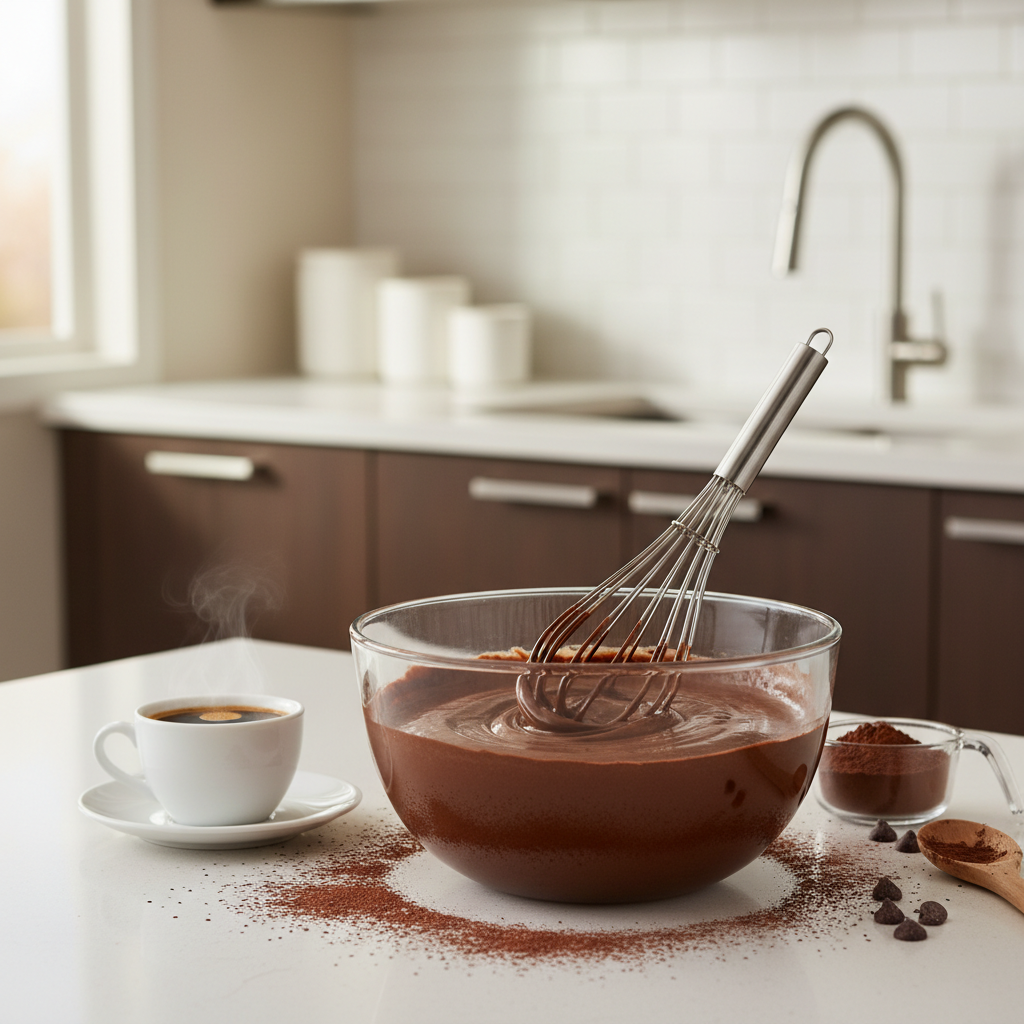
The approach below uses oil for moisture, sour cream for richness, and hot coffee to bloom the cocoa so the cake tastes darker and more “fudgy” without extra fuss.
Ingredients that make a moist fudgy chocolate cake (and smart substitutions)
You don’t need rare ingredients, but you do need the right roles covered: structure, moisture, and flavor.
- All-purpose flour: enough structure to slice cleanly, don’t overpack it.
- Unsweetened cocoa powder: natural cocoa gives a brighter chocolate note, Dutch-process tends to taste smoother and darker.
- Neutral oil: keeps the crumb moist even after refrigeration.
- Sour cream: adds fat and acidity for tenderness and depth.
- Hot coffee or hot water: blooms cocoa for stronger flavor.
- Eggs: bind and add richness, room temp helps emulsify.
- Brown sugar + granulated sugar: sweetness plus moisture retention.
Substitution notes (realistic, not magical): if you’re out of sour cream, full-fat Greek yogurt usually works similarly, though some brands run thicker and can slightly tighten crumb. If you avoid coffee, hot water works, the chocolate flavor may read a bit lighter.
Best moist fudgy chocolate cake recipe (step-by-step)
This makes two 8-inch rounds (or one 9x13). If you want tall layers, stick with 8-inch pans and don’t rush the bake.
Ingredients
- 1 3/4 cups (210g) all-purpose flour
- 3/4 cup (65g) unsweetened cocoa powder
- 2 cups (400g) granulated sugar
- 1/3 cup (70g) light brown sugar, packed
- 2 tsp baking powder
- 1 1/2 tsp baking soda
- 1 tsp fine salt
- 2 large eggs, room temp
- 1/2 cup (120g) sour cream
- 1/2 cup (120ml) neutral oil
- 2 tsp vanilla extract
- 1 cup (240ml) buttermilk, room temp
- 3/4 cup (180ml) hot coffee (or hot water)
Method
- Prep: Heat oven to 350°F. Grease two 8-inch pans, line bottoms with parchment, lightly cocoa-dust sides.
- Mix dry: Whisk flour, cocoa, sugars, baking powder, baking soda, salt in a large bowl.
- Mix wet: Whisk eggs, sour cream, oil, vanilla, buttermilk in a second bowl until smooth.
- Combine: Pour wet into dry, whisk just until you stop seeing dry pockets.
- Bloom cocoa: Stream in hot coffee, whisk gently. Batter will look thin, that’s expected for this style.
- Bake: Divide into pans. Bake 28–35 minutes, rotate once if your oven runs uneven.
- Cool: Cool 10 minutes in pans, then turn out to racks, peel parchment, cool fully before frosting.
Doneness cue: a toothpick should come out with moist crumbs, not wet batter. The top should spring back slowly, and the cake edges may just start pulling from the pan.
Quick troubleshooting: if your cake still isn’t moist and fudgy
This is where most people get relief fast, because you don’t need to start over every time.
- Dry edges, okay center: your pans may be dark metal or thin, lower oven 15–25°F next bake, check early.
- Dry all over: likely overbaked or too much flour, next time weigh flour and pull earlier.
- Sunken center: batter overmixed or leavening too strong, also common when oven door opens too early.
- Gummy line at bottom: underbaked or too much liquid, confirm pan size and oven temp.
According to U.S. Food and Drug Administration (FDA)... if you taste batter, remember it may contain raw eggs and flour that can carry foodborne bacteria, so it’s safer to rely on visual cues and a thermometer instead.
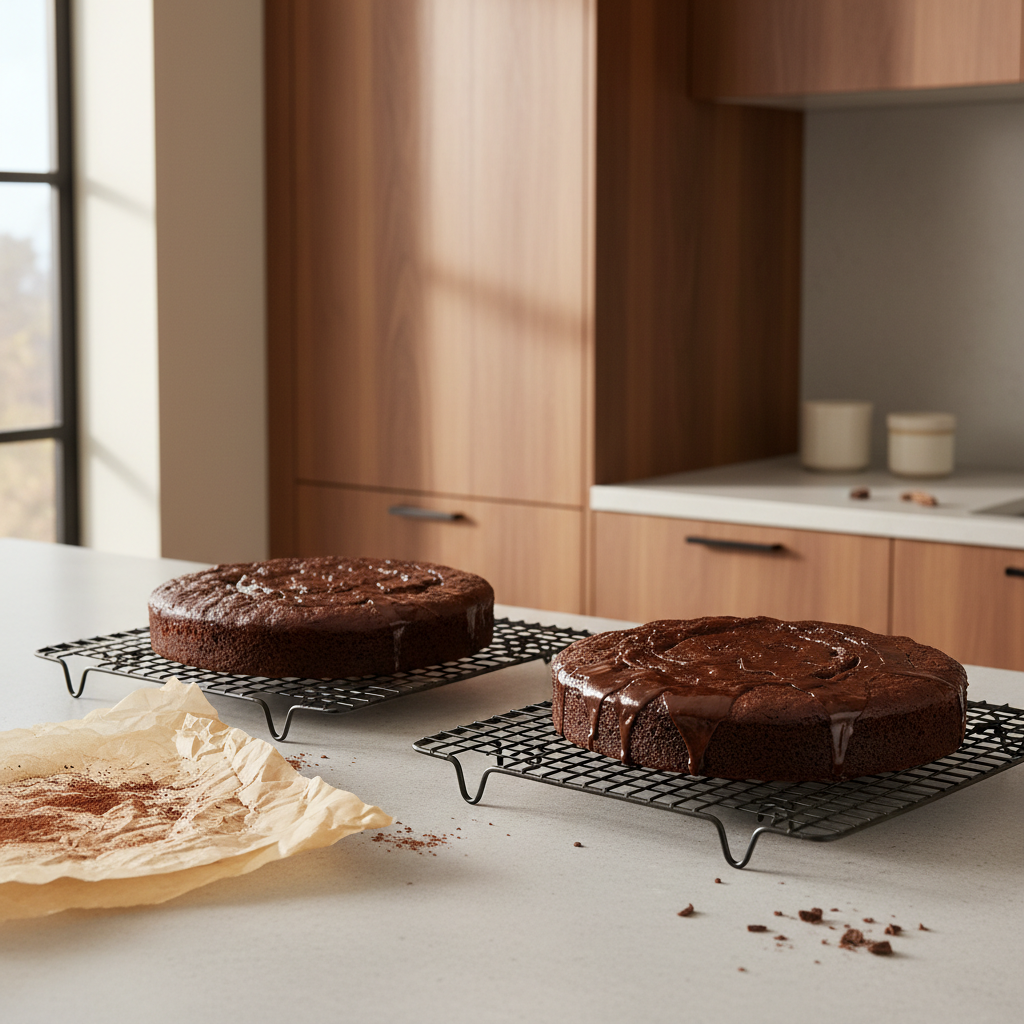
If you want to be precise, aim for an internal temp around 200–205°F in the center for many chocolate layer cakes, but oven behavior varies, so treat temperature as a guide, not a promise.
Frosting options that keep the cake tasting “fudgy”
The cake can be perfect, then a too-sweet frosting makes it taste flat. Pick a topping that reinforces chocolate and adds softness.
Three good matches
- Chocolate ganache: heavy cream + chopped chocolate, glossy and rich, very bakery-style.
- Fudge buttercream: buttercream plus melted chocolate or cocoa, lighter than ganache but still deep.
- Chocolate sour cream frosting: tangy, soft-set, great if you dislike super-sweet icings.
Key point: if your layers feel a touch dry, a thin spread of ganache between layers acts like a moisture barrier and usually helps by the next day.
Make-ahead, storage, and serving tips (so it stays moist)
This cake tends to improve after a rest, but storage choices matter.
- Make ahead: bake layers, cool, wrap tightly, refrigerate up to 2 days or freeze up to 2 months.
- After frosting: cover well, refrigerate if your frosting needs it, then bring to room temp for best texture.
- Serving: slice with a hot, dry knife for cleaner cuts on fudgy crumb.
If your home runs dry, consider adding a simple syrup brush, but go light, too much can turn the crumb sticky.
At-a-glance guide: pans, bake times, and easy adjustments
If you bake often, this is the part you’ll come back to.
| Pan | Approx bake time at 350°F | Notes |
|---|---|---|
| Two 8-inch rounds | 28–35 min | Tall layers, watch center doneness |
| Two 9-inch rounds | 23–30 min | Thinner layers, check early |
| 9x13-inch | 30–40 min | Easy sheet cake, edges bake faster |
| 24 cupcakes | 16–20 min | Don’t overfill, 2/3 full works well |
- High altitude: you may need small tweaks to leavening and liquid, check a trusted local extension resource.
- Dark pans: they bake hotter, consider lowering oven temp slightly.
Key takeaways before you start
- Measure flour carefully, ideally by weight, it’s the biggest “mystery” fix.
- Hot coffee blooms cocoa and deepens flavor without adding effort.
- Pull the cake earlier than you want, chocolate cakes keep baking as they cool.
- Choose a frosting that supports richness, ganache is the easiest way to keep a fudgy vibe.
If you’re chasing that bakery slice, focus on process more than perfection, this style rewards small discipline. Bake it once, take notes, and your next round will feel almost automatic.
If you try this and want it even richer, swap in Dutch-process cocoa (if your leavening fits) or add a touch more sour cream, then watch bake time closely. That’s usually where the “best chocolate cake recipe moist fudgy” feeling locks in.