
Indian butter chicken is one of those dishes that sounds like a restaurant-only project, but in a home kitchen it mostly comes down to three things: flavorful chicken, a smooth tomato-cream sauce, and heat control so nothing tastes raw or breaks.
If you have tried it before and ended up with bland sauce, tough chicken, or a “separated” orange oil slick on top, you are not alone. The method matters more than fancy equipment, and a few small choices change everything.
This guide keeps it practical for U.S. grocery stores, gives you smart substitutions, and calls out the steps that actually make indian butter chicken taste rich, not heavy.
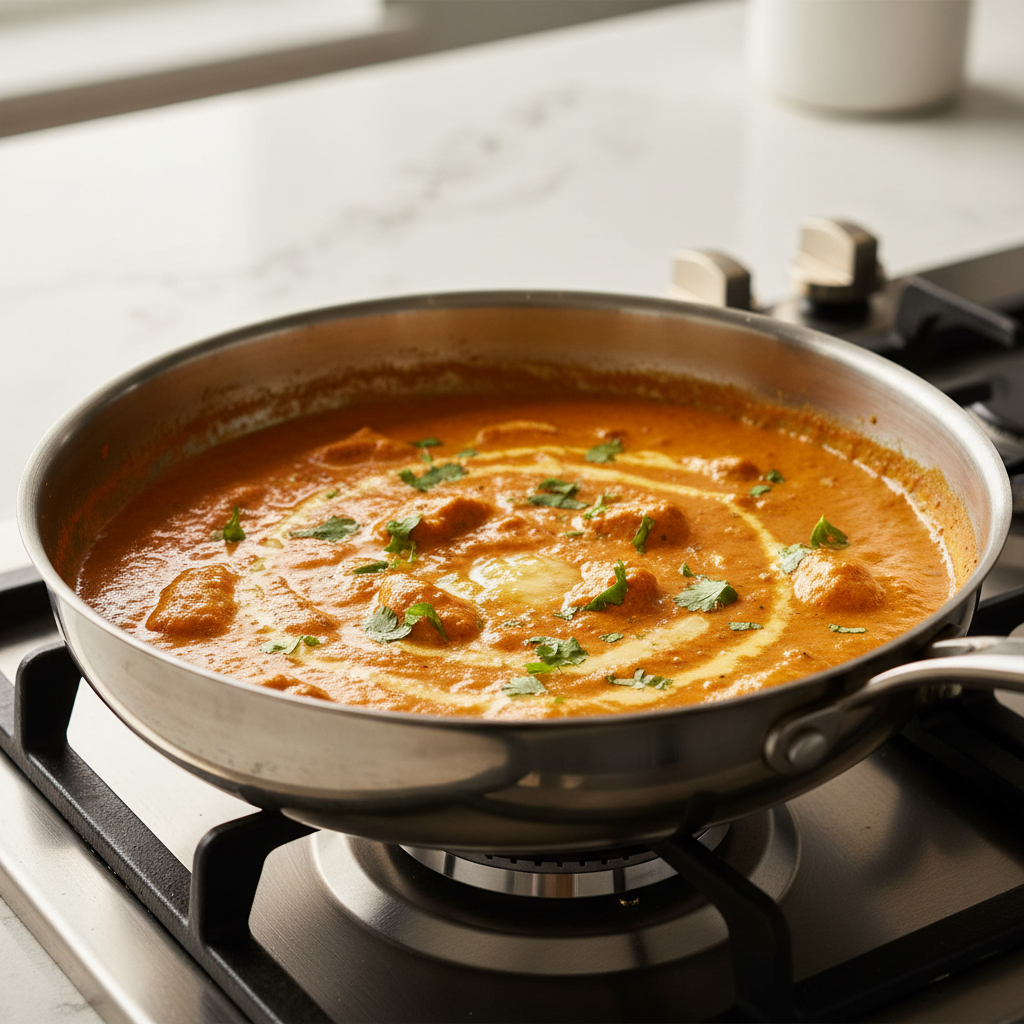
What makes butter chicken taste “right” (and what usually goes wrong)
Good butter chicken tastes layered: gentle smoke from spices, sweet-tart tomato, and a creamy finish that still feels bright. When it misses, the cause is usually simple.
- Chicken dries out: breast cooked too long, or no marinade to protect texture.
- Sauce tastes sharp: tomatoes not cooked down, spices not bloomed in fat, or not enough salt.
- Gritty sauce: onion-tomato base not blended well, or ground spices clumping.
- Sauce splits: heat too high after adding cream, or using low-fat dairy.
According to USDA guidance on food safety, chicken should reach 165°F at the thickest part. Keep that in mind, but do not let it push you into overcooking; you can hit temperature and still keep it tender if you manage heat and timing.
Ingredients you can actually find in U.S. stores (with smart swaps)
This is written for what most people can buy at a typical U.S. supermarket, with a couple optional pantry items that make indian butter chicken taste closer to your favorite takeout.
Core ingredients
- Chicken thighs (boneless/skinless): forgiving, stays juicy. Breast works, but watch cook time.
- Plain full-fat yogurt: for marinade tenderness and mild tang.
- Canned tomato puree or crushed tomatoes: consistent flavor year-round.
- Heavy cream: helps keep sauce smooth; half-and-half can work but is easier to split.
- Butter: use real butter; it carries spice aromas.
- Garlic and ginger: fresh is best, paste works on busy nights.
Spices (typical “butter chicken” profile)
- Garam masala
- Ground cumin
- Ground coriander
- Kashmiri chili powder (optional for color and mild heat; swap paprika + a pinch of cayenne)
- Turmeric (use a light hand)
- Salt, black pepper
Optional but worth it
- Kasuri methi (dried fenugreek leaves): that “restaurant” aroma. Crumble before adding.
- Cardamom or a small cinnamon stick: subtle warmth in the sauce base.
Quick self-check: which butter chicken problem are you solving?
If you want faster improvement, match your situation to the fix instead of changing everything at once.
- “Mine tastes thin and tomato-y” → cook the tomato base longer, add a little sugar only if needed, finish with butter and cream off high heat.
- “Mine is bland” → increase salt slightly, bloom spices in butter, add garam masala at the end, not only at the start.
- “Mine is gritty” → blend the sauce base fully, then strain if you want ultra-smooth texture.
- “Mine is too spicy” → reduce cayenne, use paprika for color, add extra cream at the end.
- “Mine tastes heavy” → add a touch more acid (tomato), and finish with kasuri methi for lift instead of more butter.
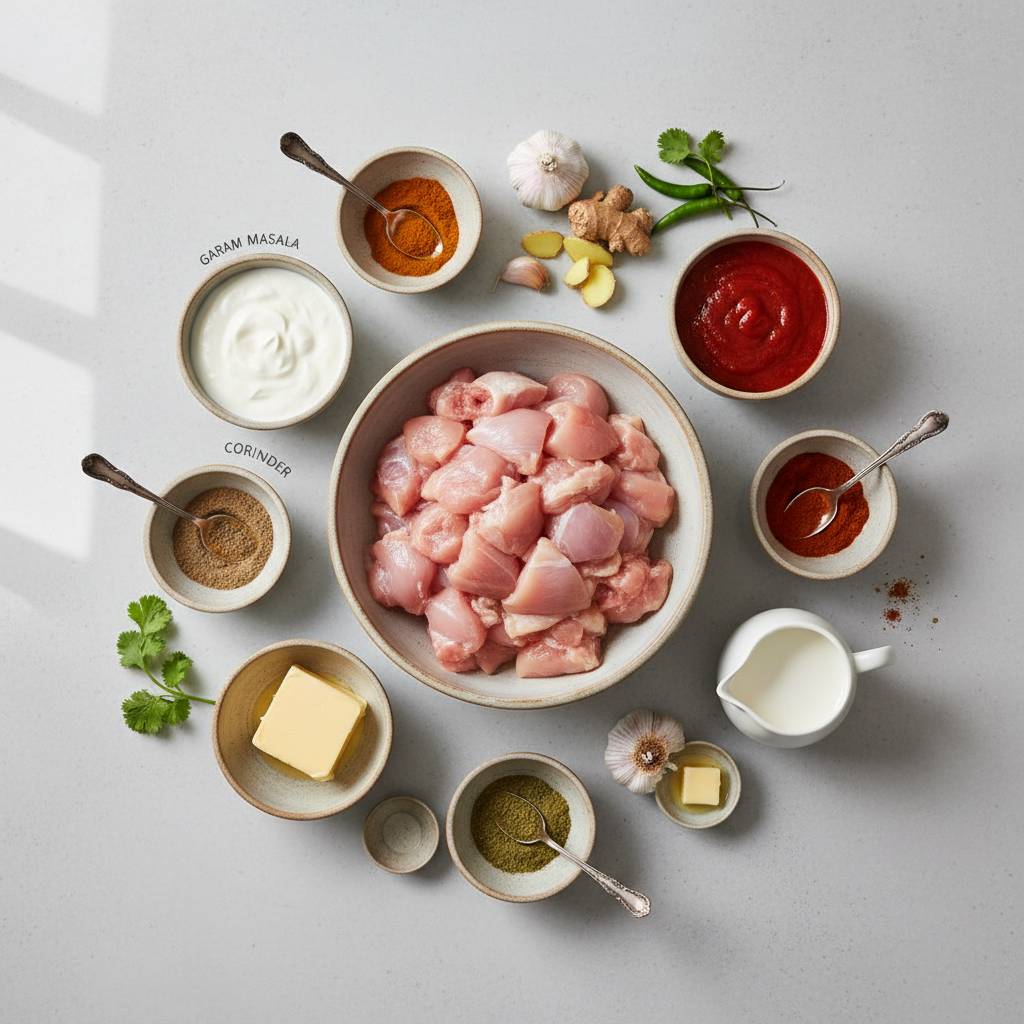
Easy indian butter chicken recipe (step-by-step)
This method uses a simple yogurt marinade, then a blended sauce base. You can do it in one pan plus a blender. If you are short on time, even 20–30 minutes of marinating helps.
1) Marinade the chicken (15 minutes to overnight)
- 1.5 lb boneless chicken thighs, cut into bite-size pieces
- 1/2 cup plain full-fat yogurt
- 1 tbsp lemon juice
- 3–4 cloves garlic, grated
- 1 tbsp ginger, grated
- 1 tsp ground cumin
- 1 tsp ground coriander
- 1 tsp Kashmiri chili powder (or 1 tsp paprika + pinch cayenne)
- 1/2 tsp turmeric
- 1 to 1.5 tsp salt
Mix, coat chicken well, and refrigerate. If you only have time for one thing, do this; it does a lot of work for tenderness and flavor.
2) Sear the chicken (don’t fully cook it yet)
Heat a wide pan on medium-high, add a little oil or butter, and sear chicken in batches so it browns instead of steaming. Pull it when the outside looks cooked but the center may still be slightly under; it finishes in the sauce.
3) Build the sauce base
- 2 tbsp butter
- 1 medium onion, sliced
- More garlic/ginger if you like (optional)
- 1.5 cups tomato puree (or crushed tomatoes)
- 1 tsp cumin + 1 tsp coriander
- 1/2 to 1 tsp paprika or Kashmiri chili powder
- Salt to taste
Cook onion in butter until soft and lightly golden, then add spices and stir 30 seconds so they smell fragrant. Add tomatoes and simmer until the sauce darkens slightly and stops tasting “raw,” usually 10–15 minutes. If it starts sticking, lower heat and splash a little water.
4) Blend for smoothness
Blend the sauce carefully until silky. If you want a restaurant-smooth finish, strain it back into the pan; not required, but it helps if you hate onion texture.
5) Finish with cream, butter, and chicken
Lower heat. Stir in 3/4 cup heavy cream and 1 tbsp butter, then add chicken back. Simmer gently 6–10 minutes until chicken reaches safe temperature and stays tender. Turn off heat, then stir in 1 to 2 tsp garam masala and a big pinch of kasuri methi if you have it.
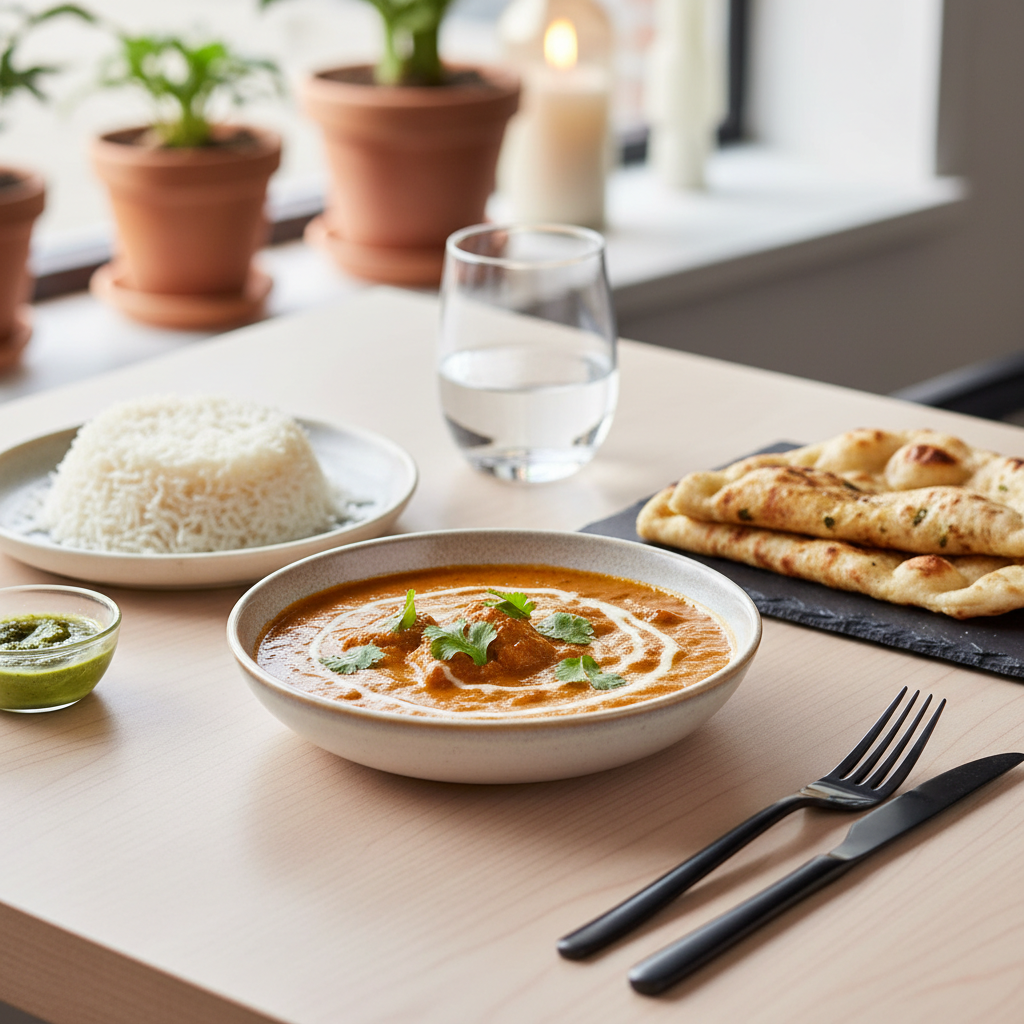
Serve with basmati rice, naan, or even warm tortillas in a pinch. Indian butter chicken is forgiving that way.
Timing and scaling table (weeknight planning)
Here is a realistic way to plan this around a normal evening, plus how it scales if you cook for more people.
| Task | Typical time | Notes |
|---|---|---|
| Quick marinade | 15–30 min | Overnight gives deeper flavor, but short works. |
| Sear chicken | 8–12 min | Do batches for better browning. |
| Simmer tomato base | 10–15 min | Cook until it tastes mellow, not sharp. |
| Blend + finish | 10–15 min | Keep heat low after adding cream. |
| Total cook time | 40–60 min | Depends on prep speed and batch size. |
| Scaling up | +10–20 min | Mostly from searing more chicken. |
Practical tips that make it taste like takeout (without extra fuss)
- Use thighs if you can, especially when learning. They stay juicy even if you simmer a bit long.
- Bloom spices in fat for aroma, but keep it short so nothing burns.
- Garam masala goes late. Early garam masala can taste flat by the time you finish.
- Kasuri methi at the end adds lift and that familiar “butter chicken” finish.
- Low heat after cream keeps sauce smooth; aggressive boiling is where splitting happens.
- Salt in two moments: a little in the marinade, then adjust once the sauce reduces.
Common mistakes (and how to avoid them)
Most “bad” butter chicken comes from a couple habits that feel logical in the moment.
- Rushing the tomato cook-down: if the sauce tastes sharp, it usually needs more simmer time before dairy goes in.
- Cranking the heat to finish faster: cream sauces punish this, keep it at a gentle simmer.
- Using low-fat yogurt or cream: it can work, but it increases splitting risk; if you need lighter options, lower heat even more and add dairy slowly.
- Overloading turmeric: a little helps color, too much turns bitter and “dusty.”
- Not tasting for salt: tomatoes and cream both need seasoning; adjust carefully near the end.
If you are cooking for someone with allergies or dietary restrictions, ingredient choices can get complicated fast. In those cases, it may be worth checking with a qualified professional, especially for medical diets.
Key takeaways (save this for next time)
- Marinate even briefly, it protects texture and boosts flavor.
- Cook the tomato base until mellow before adding cream.
- Blend for smooth sauce, strain only if you want extra silky results.
- Finish gently: low heat after dairy, garam masala and kasuri methi at the end.
Conclusion: a weeknight butter chicken you can repeat
Once you get the heat control and the “tomato base first, dairy later” rhythm, indian butter chicken stops feeling intimidating and starts feeling reliable. Make it once as written, then tweak only one variable next time: more kasuri methi, a little more smoke from searing, or a touch more cream for a softer finish.
If you want an easy next step, put garam masala and kasuri methi on your grocery list, those two items often make the biggest difference for very little effort.
FAQ
How do I make indian butter chicken less spicy without losing flavor?
Use paprika for color and keep cayenne minimal, then lean on garam masala at the end for aroma. Extra cream can soften heat, but salt and kasuri methi keep it from tasting muted.
Can I use chicken breast instead of thighs?
Yes, but sear quickly and finish gently in the sauce so it does not dry out. Cutting breast into slightly larger pieces also helps, because it overcooks fast.
Why did my sauce split after adding cream?
High heat is the usual culprit, especially if the sauce was boiling. Lower heat before adding cream, add it slowly, and keep the final simmer gentle.
Do I have to blend the sauce?
You do not have to, but blending changes the texture from “stew-like” to the smoother restaurant style. If you skip blending, slice onions very thin and cook them down longer.
What is the best tomato product for butter chicken in the U.S.?
Canned tomato puree is consistent and usually less watery than crushed tomatoes, which makes it easier to reduce. If your brand tastes very acidic, a small pinch of sugar can help, but simmering longer often does more.
Is butter chicken healthy?
It can fit into many eating styles, but it is typically rich because of butter and cream. If you are managing a health condition, it may be smart to talk with a registered dietitian about adjustments that fit your needs.
Can I make it ahead and reheat it?
Yes, and flavor often improves the next day. Reheat slowly on low heat to reduce the chance of separation, and add a small splash of cream or water if it thickens too much.
If you are trying to get indian butter chicken right for the first time, or you want a smoother sauce without guessing, it can help to follow a measured ingredient list once, then keep notes on what you changed so your next batch is better for your taste.