
alfredo sauce creamy is usually what people want, but what they often get is sauce that breaks, turns grainy, or tastes flat after five minutes on the heat.
This recipe keeps it simple on purpose, a short ingredient list, clear timing, and a few small technique choices that make the texture feel smooth and rich instead of heavy or gluey.
You’ll get a dependable base sauce, then options to adjust thickness, add protein or veggies, and troubleshoot the two most common problems, clumps and separation.
What “creamy” Alfredo actually means (and what it doesn’t)
Creamy Alfredo is less about adding more cream and more about building an emulsion, that glossy mix where fat, water, and cheese stay together instead of splitting.
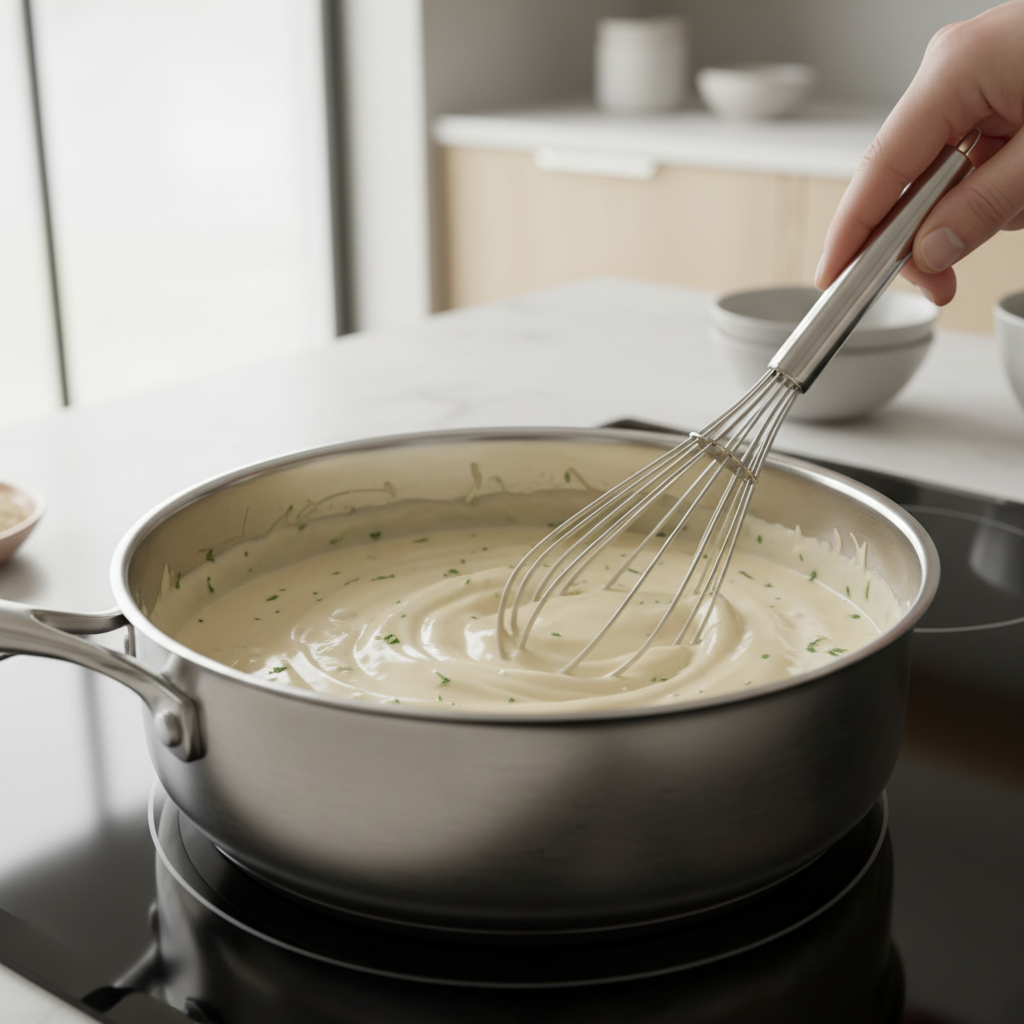
Classic Alfredo is traditionally butter, cheese, and pasta water, and many American versions add heavy cream for an easier, more forgiving result. Neither is “wrong,” but the method matters, especially heat control and when you add Parmesan.
According to the USDA, dairy foods like milk and cream should be kept out of the temperature danger zone as much as possible, so it’s smart to keep your sauce warm, not simmering hard, and refrigerate leftovers promptly.
Ingredients for a simple creamy Alfredo sauce
This is a straightforward, weeknight-friendly set. If you cook often, you probably have most of it already.
- Unsalted butter (flavor base, helps the sauce feel silky)
- Heavy cream (the easiest path to an alfredo sauce creamy texture)
- Garlic (fresh minced or microplaned, optional but recommended)
- Parmesan cheese (finely grated, not shelf-stable “shaker” style)
- Salt + black pepper
- Pasta water (starchy, helps bind and thin as needed)
Parmesan note: pre-shredded cheese often has anti-caking agents, and that can make the sauce feel gritty. It won’t always ruin it, but it’s one of those “why is this happening?” moments.
5-minute method: step-by-step (with the timing that matters)
Keep your heat lower than you think, that’s the whole trick. A gentle melt and warm whisking beat a rolling simmer every time.
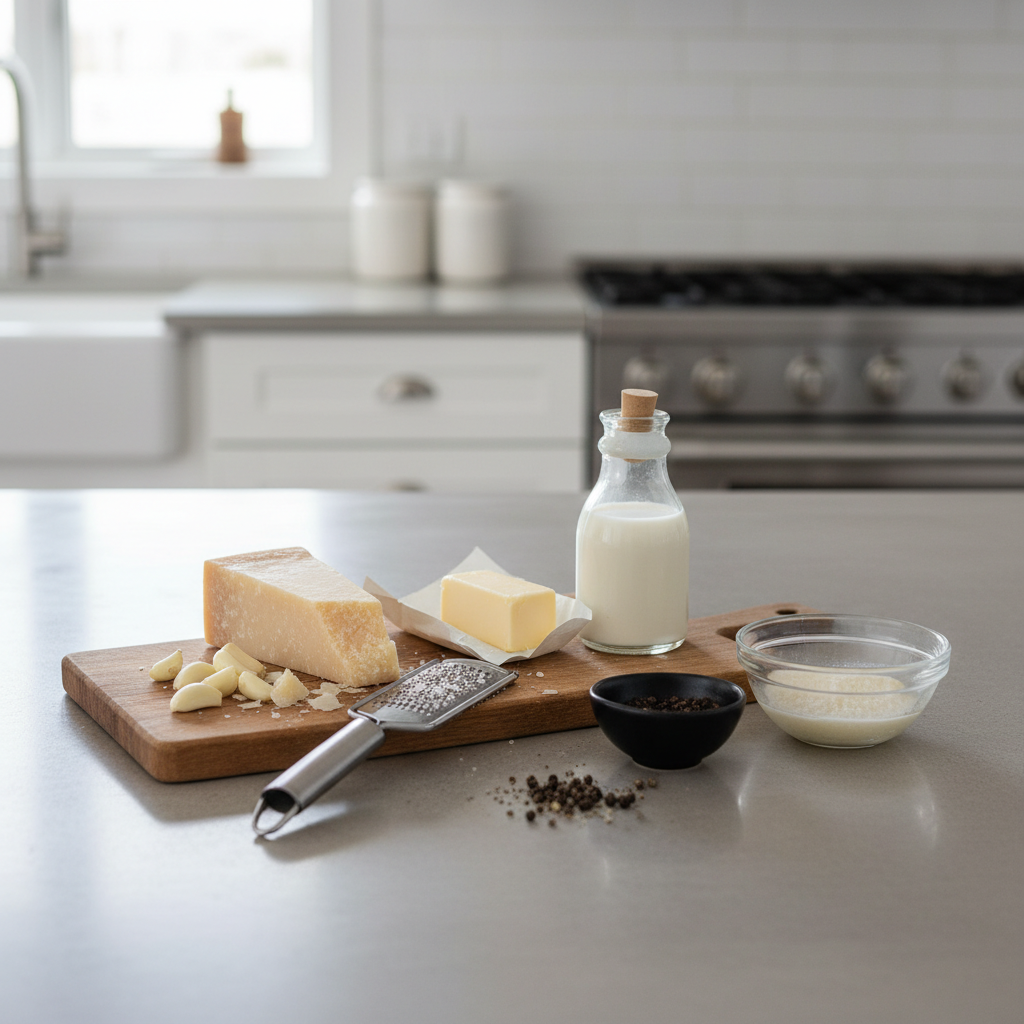
Base recipe (makes about 2 cups, enough for 8 oz pasta)
- 4 tbsp unsalted butter
- 1 cup heavy cream
- 2–3 small garlic cloves, minced (optional)
- 1 to 1 1/2 cups finely grated Parmesan, plus more to finish
- Salt to taste, black pepper to taste
- 2–6 tbsp hot pasta water, as needed
Steps
- Melt butter in a skillet or saucepan over medium-low heat.
- Warm garlic 30–45 seconds, just until fragrant, don’t brown it.
- Add cream, stir, and bring to a gentle steam, not a boil, about 2 minutes.
- Lower heat to low, then whisk in Parmesan in small handfuls until smooth.
- Adjust with a splash of pasta water to loosen and help it cling.
- Finish with pepper, taste for salt, then toss with hot pasta right away.
If you’re aiming for that restaurant cling, toss the pasta in the pan for 30–60 seconds so the sauce tightens slightly and coats evenly.
Quick fixes: too thick, too thin, grainy, or separated
Most “Alfredo problems” come from either heat that’s a bit too high or cheese that went in too fast. Here’s the fast triage guide.

| Problem | Likely cause | Fix in the moment |
|---|---|---|
| Too thick / clumpy | Too much cheese, sauce cooled, not enough liquid | Whisk in 1 tbsp hot pasta water at a time, keep heat low |
| Too thin | Not enough reduction, too much pasta water | Simmer gently 1–2 minutes, then add a little more Parmesan |
| Grainy texture | Cheese overheated or added too fast, pre-shredded cheese | Take off heat, whisk vigorously, add a splash of warm cream |
| Separated / oily | Boiled, high heat, prolonged holding | Lower heat, whisk in 1–2 tbsp warm cream or pasta water to re-emulsify |
If you need to hold the sauce for a few minutes, keep it on the lowest heat and stir occasionally. Alfredo tends to punish “set it and forget it.”
Make it your own: flavor add-ins that don’t break the sauce
Once you can make the base, upgrades become easy, just keep the same “gentle heat + add at the end” mindset.
- Protein: sliced chicken, shrimp, or crispy pancetta, add warmed, not cold from the fridge.
- Veggies: sautéed mushrooms, spinach (wilted), peas, roasted broccoli.
- Heat: a pinch of red pepper flakes, especially good with shrimp.
- Brightness: a tiny squeeze of lemon at the end can help, but go slow so it doesn’t taste “sharp.”
If you’re craving a deeper savory note, a small spoon of cream cheese can make an alfredo sauce creamy and stable, but it shifts the flavor slightly more “American-style.”
Self-check: are you set up for success?
Before you start, a quick checklist saves you from most issues.
- Your Parmesan is finely grated (microplane or very fine shred), not chunky.
- You’re using medium-low to low heat once the cream warms.
- You saved at least 1/2 cup pasta water before draining.
- Your pasta finishes cooking close to when the sauce finishes.
- You plan to toss pasta in the pan, not ladle sauce onto pasta sitting in a bowl.
Many people blame the recipe when the real issue is timing, pasta cooling down and sauce thickening too fast makes everything feel heavier than it should.
Storage, reheating, and food-safety notes
Alfredo is best right after it’s made, but leftovers can still be good if you reheat gently.
- Store: in a sealed container in the fridge. If you’re unsure about storage time for dairy-based leftovers, consider checking current guidance. According to the USDA, refrigerating perishable foods promptly helps reduce foodborne illness risk.
- Reheat: low heat in a pan, add a splash of milk, cream, or water, then whisk until smooth.
- Avoid: high microwave power or boiling, both can push the sauce to separate.
If the sauce looks “split” after chilling, that’s common. Gentle heat and a little added liquid usually bring it back together.
Key takeaways for a creamy result every time
- Low heat wins, boiling is the fastest way to break Alfredo.
- Add Parmesan gradually, off strong heat, whisking constantly.
- Pasta water is your tool for texture and cling, not just thinning.
- Use real grated Parmesan when you can, it melts cleaner.
Make the base once or twice, and you’ll stop chasing complicated hacks. Most home cooks only need a calmer burner and better cheese handling to get that alfredo sauce creamy finish.
Conclusion: keep it simple, keep it gentle
The most reliable Alfredo is the one you can repeat on a busy night, butter, cream, Parmesan, and a little patience with heat. If you cook pasta weekly, save this method, then tweak the add-ins based on what’s in your fridge.
If you want a next step, try making it twice in the same month, once as written, once with mushrooms and chicken, you’ll feel exactly where your preferred thickness and cheese level land.
FAQ
Why does my Alfredo sauce turn grainy?
Usually the heat runs too high when the Parmesan goes in, or the cheese is pre-shredded and doesn’t melt smoothly. Pull the pan off heat, whisk, and loosen with warm cream or pasta water.
Can I make Alfredo sauce without heavy cream?
You can, but texture becomes more sensitive. Many people use milk plus a little butter and extra Parmesan, yet it may not stay as stable. If you need a substitute for dietary reasons, it may be worth asking a nutrition professional what fits your needs.
How do I thicken Alfredo sauce fast?
Let it simmer very gently for a minute or two, stirring, then add a small handful of Parmesan. Avoid cranking up the heat, that often backfires.
How much sauce do I need per pound of pasta?
It depends on how saucy you like it, but many home cooks land around 2 to 3 cups for 1 pound. If you serve with chicken and veggies, you might want a bit more.
Is it okay to use pre-grated Parmesan in the green can?
In a pinch, yes, but expect less smooth melting and a slightly different flavor. For the creamiest texture, finely grate a wedge of Parmesan.
Why does Alfredo sauce get so thick as it cools?
Cheese and butter firm up as temperature drops, and the sauce loses that fluid emulsion feel. Reheat gently and add a splash of liquid while whisking.
Can I freeze creamy Alfredo sauce?
Freezing can work, but separation is common because dairy emulsions don’t always thaw smoothly. If you try it, thaw in the fridge and reheat slowly with added cream while whisking.
If you’re trying to get alfredo sauce creamy consistently and you keep hitting the same texture issues, it can help to write down your pan heat level, cheese type, and timing once, then tweak one variable at a time, it’s a surprisingly fast way to “lock in” your personal version.