
Gyro recipes sound simple until you try to make them at home and the meat turns dry, the flavors feel flat, or the wrap falls apart halfway through lunch. The good news is you can get very close to the classic gyro-shop vibe in a regular U.S. kitchen, you just need a few practical choices that most online recipes skip.
This guide focuses on what usually makes the difference: how you season, how you form and cook the meat, and how you build the pita so it eats clean. I’ll also give you a couple of “choose your path” options, because not everyone wants to babysit a meat loaf in the oven on a weeknight.
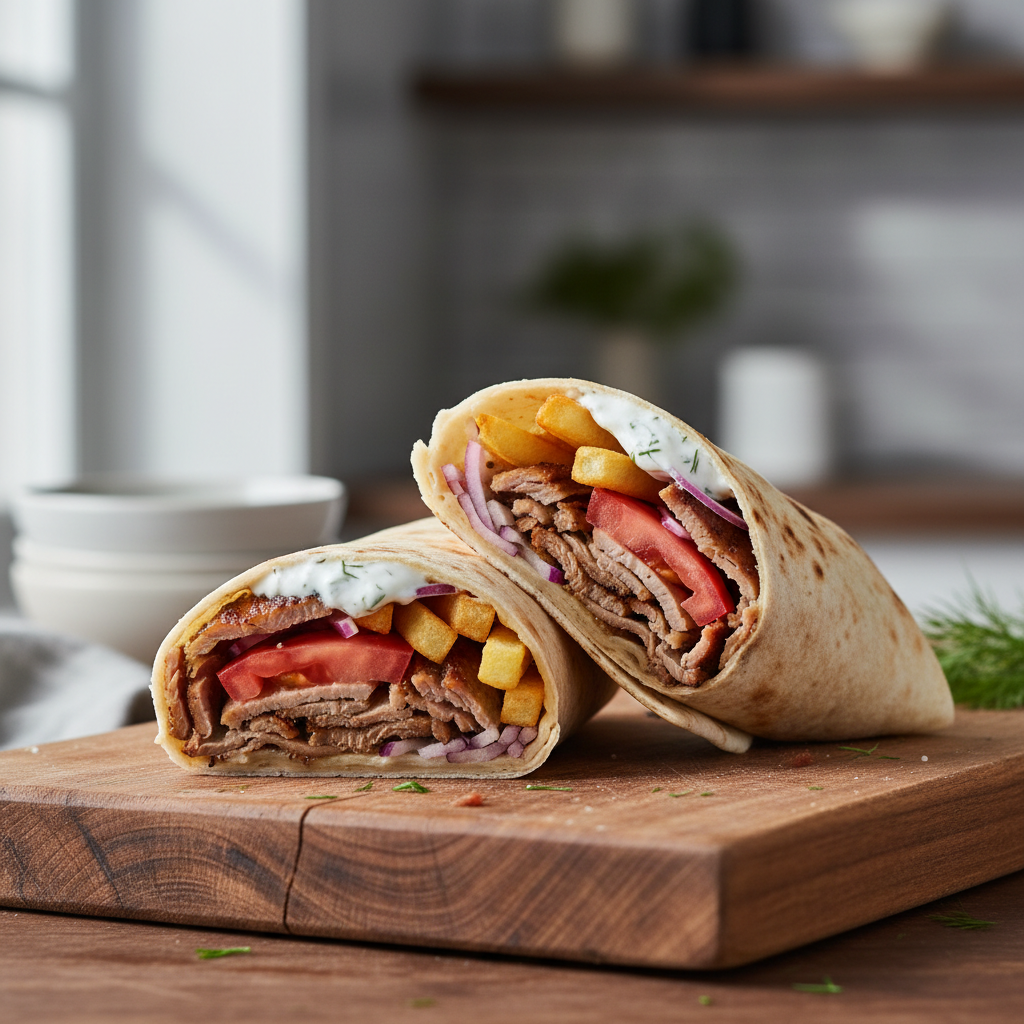
One quick note on authenticity: in many Greek shops, gyro meat is cooked on a vertical rotisserie, shaved thin, and served fast. At home, you’re mimicking that texture and seasoning with an oven, grill, or skillet, so the goal is “authentic flavor and bite,” not necessarily the same equipment.
What makes gyro flavor taste “authentic” at home
Most home attempts miss one of these: enough salt, enough aromatics, or enough fat to stay juicy. The seasoning profile can vary by region and shop, but a few flavors show up often.
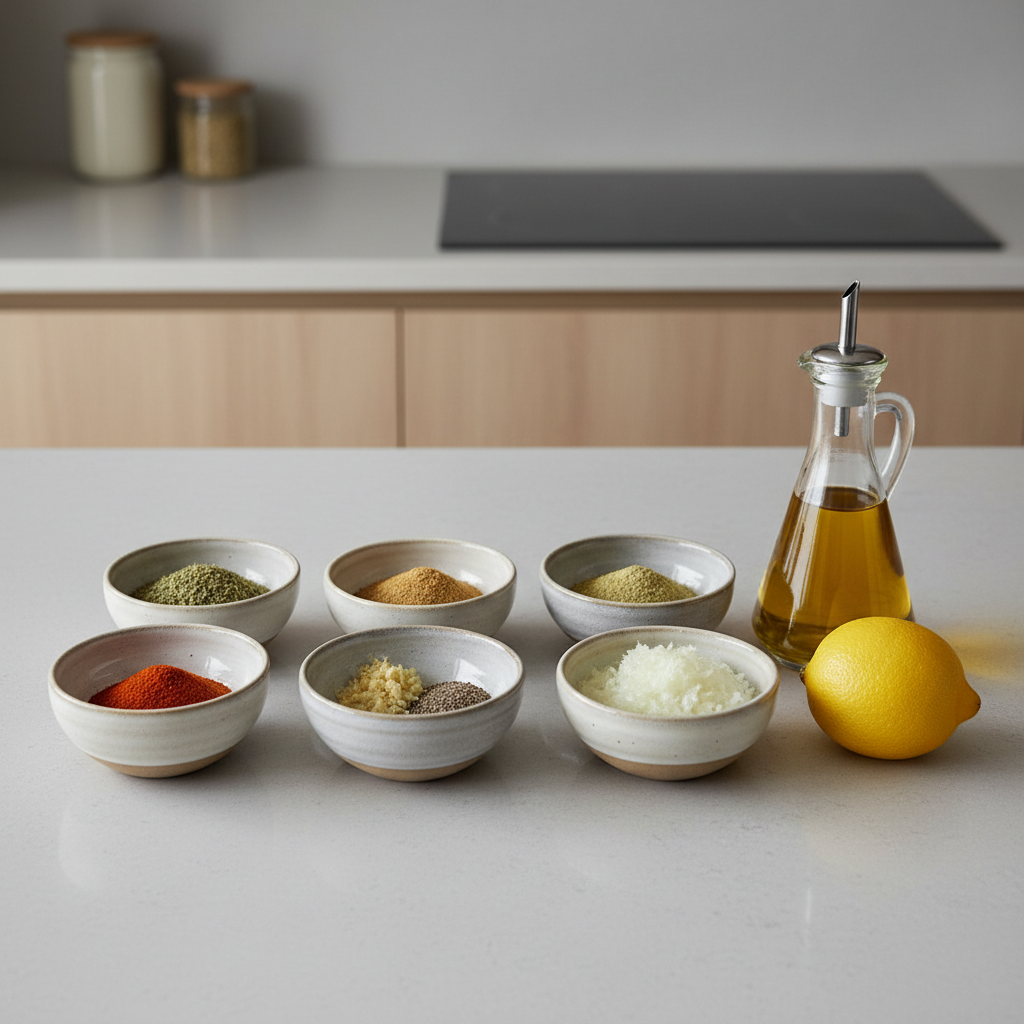
- Aromatic base: garlic, onion (often grated or blended), and oregano.
- Warm spice note: cumin and coriander are common, sometimes a touch of paprika.
- Acid balance: lemon in the sauce and/or a little vinegar in the meat mix helps.
- Texture cue: very fine, cohesive meat mixture so slices hold together.
According to USDA Food Safety and Inspection Service (FSIS), ground meat needs careful temperature control and thorough cooking, which matters here because a lot of gyro-style methods rely on tightly packed ground meat. Keep that in mind when you choose your cooking approach.
Quick self-check: which gyro recipe style fits your kitchen?
Before you shop, pick a method that matches your tools and patience level, this avoids the classic “I started strong, now I hate this” outcome.
- You want closest shop texture: packed ground meat “loaf” baked and sliced thin.
- You want fastest weeknight option: skillet or griddle strips (chicken or pork works great).
- You want outdoor char: grill skewers or grill-pan cutlets.
- You need lower mess: sheet-pan chicken gyro bowls, then pita as needed.
If you’re feeding picky eaters, chicken tends to win, if you’re chasing classic street-food bite, the packed ground meat method gets you closer.
Core seasoning blend (use this across multiple gyro recipes)
Instead of overcomplicating it, build one reliable blend and reuse it for beef-lamb, chicken, or pork. This makes your gyro recipes feel consistent even when the protein changes.
All-purpose gyro seasoning (about 2–3 lb meat)
- 2 tsp kosher salt (adjust if using table salt)
- 2 tsp dried oregano
- 1–1.5 tsp ground cumin
- 1 tsp ground coriander
- 1 tsp sweet paprika
- 1/2 tsp black pepper
- Pinch cinnamon (optional, subtle)
- 3–5 garlic cloves, minced or grated
- 1 small onion, grated or blended to a paste
Key point: the onion paste is not “extra,” it helps moisture and that cohesive deli-slice texture when you go the baked-loaf route.
Method 1: Classic oven gyro meat (packed loaf, slice thin)
This is the “closest-to-shop” home approach. It takes some time, but it solves the usual dry-and-crumbly problem.
Ingredients (family-sized)
- 2 lb ground lamb + 1 lb ground beef (or all beef if preferred)
- Seasoning blend above
- 1 tbsp olive oil (optional, helps browning)
Steps
- Make it cohesive: mix aggressively by hand or in a stand mixer until tacky, 3–5 minutes. You want a paste-like bind, not loose crumbles.
- Pack tight: press into a loaf pan or form a compact log on a foil-lined sheet pan. Air pockets are the enemy.
- Bake: 350°F until the center reaches a safe internal temp. For ground meats, many cooks follow USDA guidance for 160°F.
- Rest, chill, slice: rest 15 minutes, then chill 1–2 hours (or overnight) for clean, thin slices.
- Finish for edges: sear slices in a hot skillet with a tiny bit of oil, this creates the browned, shaved-meat feel.
This two-step cook is the trick: baking sets the interior, pan-searing gives you the crisp bits people actually remember.
Method 2: Chicken gyros (marinade + fast cook)
If you like lighter wraps or you’re cooking for a group that avoids lamb, chicken is the most forgiving of the common gyro recipes, especially when you slice thin and cook hot.
Simple chicken marinade
- 2 lb boneless thighs (breasts work, but can dry faster)
- 2 tbsp olive oil
- 2 tbsp lemon juice
- Seasoning blend above (halve salt if your yogurt sauce is salty)
- 1/2 cup plain Greek yogurt (optional, tenderizes)
Steps
- Marinate 30 minutes to overnight.
- Cook on a grill, grill pan, or skillet over medium-high heat until safely cooked through.
- Rest 5 minutes, then slice thin against the grain.
Small but important: if the pan is crowded, chicken steams and turns pale, cook in batches and you’ll get that browning you want.
Tzatziki, pita, and assembly: where many home gyros fail
Even great meat can taste “not quite right” if the sauce is watery or the pita cracks. Spend five minutes here and your results jump.
Fast tzatziki (thick, not runny)
- 1 cup Greek yogurt
- 1/2 cucumber, grated and squeezed dry
- 1–2 garlic cloves, grated
- 1 tbsp lemon juice
- 1 tbsp olive oil
- Salt, pepper, chopped dill or mint (optional)
Squeezing cucumber dry is the difference between “sauce” and “sad soup.” If you only remember one thing, make it that.
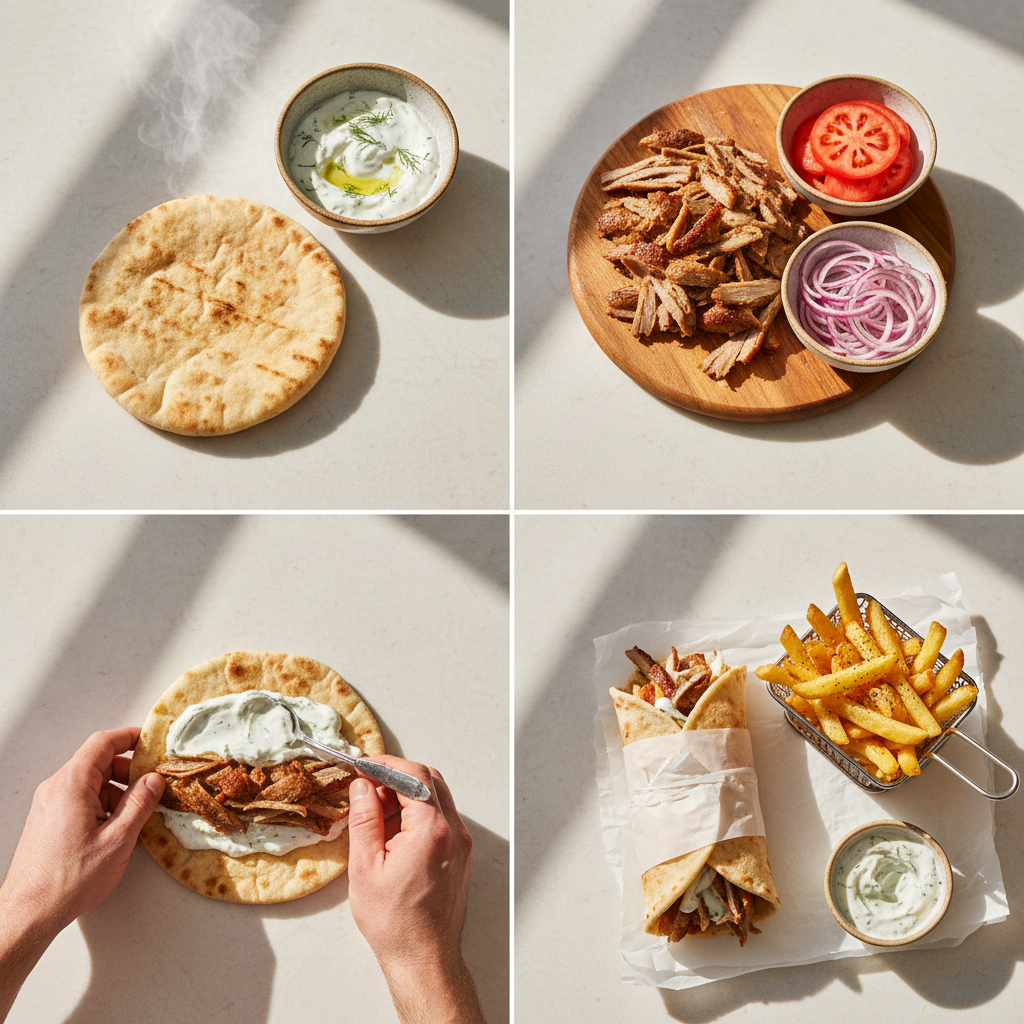
Pita handling
- Warm pita in a dry skillet 30–45 seconds per side or wrap in foil and heat briefly in the oven.
- If pita tears easily, lightly brush with oil before warming, it softens and becomes more pliable.
Classic assembly order (holds together)
- Pita
- Tzatziki base layer
- Meat
- Tomato + onion
- Fries (optional but common in many shops) + extra sauce
Practical shortcuts and make-ahead game plan
If you want homemade gyros more than once, treat it like meal prep. A lot of gyro recipes feel “hard” only because everything happens at the same time.
- Make sauce first: tzatziki improves after 30 minutes in the fridge.
- Cook meat ahead: baked loaf slices reheat well in a skillet, chicken reheats best when you keep it slightly underdone and finish in the pan.
- Prep toppings: slice onion and tomato, store separately with a paper towel to reduce sogginess.
- Choose your format: do gyro bowls midweek, wraps on weekend, same components, less stress.
If you’re storing cooked meat, chill quickly and reheat to a safe temperature. According to USDA FSIS, leftovers should be refrigerated promptly and reheated thoroughly, if you’re unsure about safety in your situation, checking their guidance is a smart move.
Troubleshooting table: common gyro problems and fixes
| Problem | Likely cause | Fix that usually works |
|---|---|---|
| Meat tastes bland | Not enough salt or aromatics | Add salt gradually, use onion paste, finish slices with a hot sear |
| Meat crumbles when slicing | Mixture not emulsified, too many air pockets | Mix longer until tacky, pack tighter, chill before slicing |
| Dry chicken | Overcooked, pan too cool | Use thighs, cook hotter in batches, rest before slicing |
| Watery tzatziki | Cucumber not drained | Squeeze grated cucumber dry, use thicker yogurt |
| Pita cracks or splits | Cold pita, low moisture | Warm briefly, wrap in towel, light oil brush if needed |
Key takeaways (so you actually remember this)
- Texture is a technique: mix and pack ground meat like you mean it, then chill before slicing.
- Flavor comes from layers: seasoned meat + lemony sauce + fresh toppings beats “more spice” every time.
- Finish matters: a quick skillet sear gives you browned edges that scream gyro.
- Pick a method you’ll repeat: chicken and bowls are how many people keep this in rotation.
Conclusion: make gyro night feel easy, not like a project
The best gyro recipes at home usually come down to two decisions: choose a cooking method you can execute without stress, then build the wrap with thick sauce and properly warmed pita. If you try the oven-loaf once for that classic texture and keep chicken gyros as your weeknight fallback, you end up with a system, not a one-off experiment.
Pick one method from this article, shop for the sauce ingredients, and cook enough meat for leftovers. Your next gyro night will feel about half as complicated.
FAQ
What meat is most authentic for gyro recipes?
In many Greek-style shops, pork or chicken is common in Greece, while U.S. diners often associate gyros with a beef-lamb blend. Both can be “authentic” in flavor if you season and cook well.
Do I need a food processor for gyro meat?
Not necessarily. A stand mixer or vigorous hand-mixing can get you that sticky, cohesive texture. A processor can help, but it’s easy to overdo and turn the mixture gummy.
Why do some gyro recipes say to chill the meat before slicing?
Chilling firms the fat and sets the structure, so you can slice thin without crumbling. It also makes the quick skillet sear easier and cleaner.
Can I make gyros with ground turkey?
You can, and it can taste good, but turkey tends to be leaner, so dryness is more likely. Adding a bit of olive oil and avoiding overcooking helps, and a generous sauce becomes more important.
How do I keep tzatziki from getting watery overnight?
Drain the cucumber aggressively and use thick Greek yogurt. If it still loosens after sitting, a quick stir and a pinch of salt often brings it back into shape.
What’s the best way to reheat gyro meat?
A hot skillet is the closest to fresh because it browns the edges again. Microwaving works in a pinch, but it can soften the surface and dull the texture.
Is it safe to cook a packed ground meat loaf?
It can be, as long as you cook to a safe internal temperature and handle leftovers properly. If you have health concerns, it’s reasonable to consult a qualified professional and follow USDA food safety guidance.
What toppings belong on a “real” gyro?
Tzatziki, tomato, and onion are common. Fries inside the wrap show up in many shops too. The “right” answer often depends on regional habits and what you grew up eating.