
how to make kadhi pakora recipe punjabi is mostly about getting two things right: a smooth yogurt-besan gravy that won’t split, and pakoras that stay tender inside without turning soggy in the kadhi.
If you’ve tried kadhi before and it came out too tangy, too thin, or mysteriously grainy, you’re not alone. Kadhi looks forgiving, but small choices like yogurt temperature, how you cook besan, and when you add pakoras change the final bowl a lot.
This guide walks you through a Punjabi-style approach you can pull off in a U.S. kitchen, including ingredient swaps that still taste “right,” a timing plan for weeknights, plus a quick troubleshooting section for the most common failures.
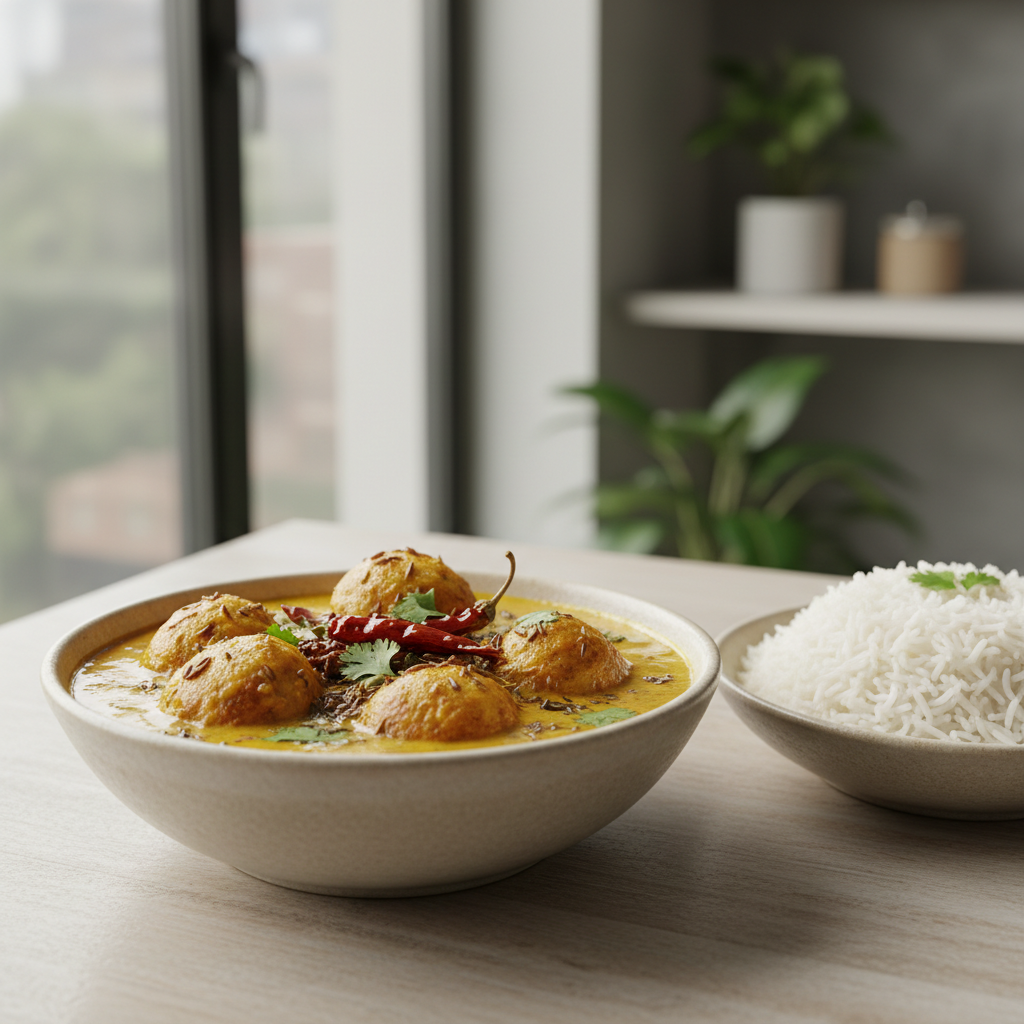
What “Punjabi Kadhi Pakora” Usually Tastes Like (So You Know You’re On Track)
Punjabi kadhi typically leans creamy, lightly tangy, and savory, with a warm spice base from cumin, mustard seeds (sometimes), and dried red chiles. It’s not meant to be sugar-sweet, and it’s rarely fiery-hot unless you push the chiles.
Texture-wise, the gravy should coat a spoon and look silky, not chalky. Pakoras should feel soft after simmering, but still hold shape. If you want pakoras that stay crisper, you can serve them on the side and ladle kadhi over at the table, but that’s a personal preference.
Ingredients and Smart U.S. Grocery Substitutions
You can make an honest Punjabi kadhi with common U.S. store items, though a couple Indian pantry ingredients make it easier.
Core ingredients
- Yogurt: plain, unsweetened. Whole milk yogurt gives the best body, but 2% works.
- Besan (gram flour/chickpea flour): Indian stores carry it; many U.S. groceries sell chickpea flour too.
- Water: to thin the yogurt-besan mix into a pourable slurry.
- Turmeric, red chili powder, salt
- Ginger-garlic: paste or finely grated
- Onion (optional): some homes add it; some skip for a cleaner gravy
For pakoras
- Besan
- Onion (thin-sliced), plus optional spinach, cilantro, or fenugreek leaves
- Ajwain (carom seeds): highly recommended; if you can’t find it, use a pinch of cumin plus a tiny pinch of dried oregano as a “good enough” aroma cue
- Baking soda (optional): very small amount for lighter pakoras
Tempering (tadka) essentials
- Ghee or neutral oil
- Cumin seeds
- Dried red chiles
- Hing (asafoetida, optional): use a tiny pinch
- Curry leaves (optional but great)
Key point: Avoid flavored yogurt and anything labeled “Greek vanilla” etc. If you only have Greek yogurt, dilute more aggressively and whisk longer to prevent a heavy, pasty gravy.
Quick Ratio Table: Yogurt-Besan Base, Pakora Batter, and Timing
This table helps you scale without doing mental gymnastics. It’s not the only way, but it stays close to how Punjabi kadhi is commonly structured.
| Batch Size | Yogurt | Besan (for kadhi) | Water (start) | Besan (for pakoras) | Cook Time (simmer) |
|---|---|---|---|---|---|
| 2-3 servings | 1 cup | 1/3 cup | 3 cups | 3/4 cup | 25-35 min |
| 4-6 servings | 2 cups | 2/3 cup | 6 cups | 1 1/2 cups | 35-45 min |
Water is the flex ingredient. Start with the amount above, then adjust after simmering. Kadhi thickens as besan cooks and also thickens a bit as it cools.
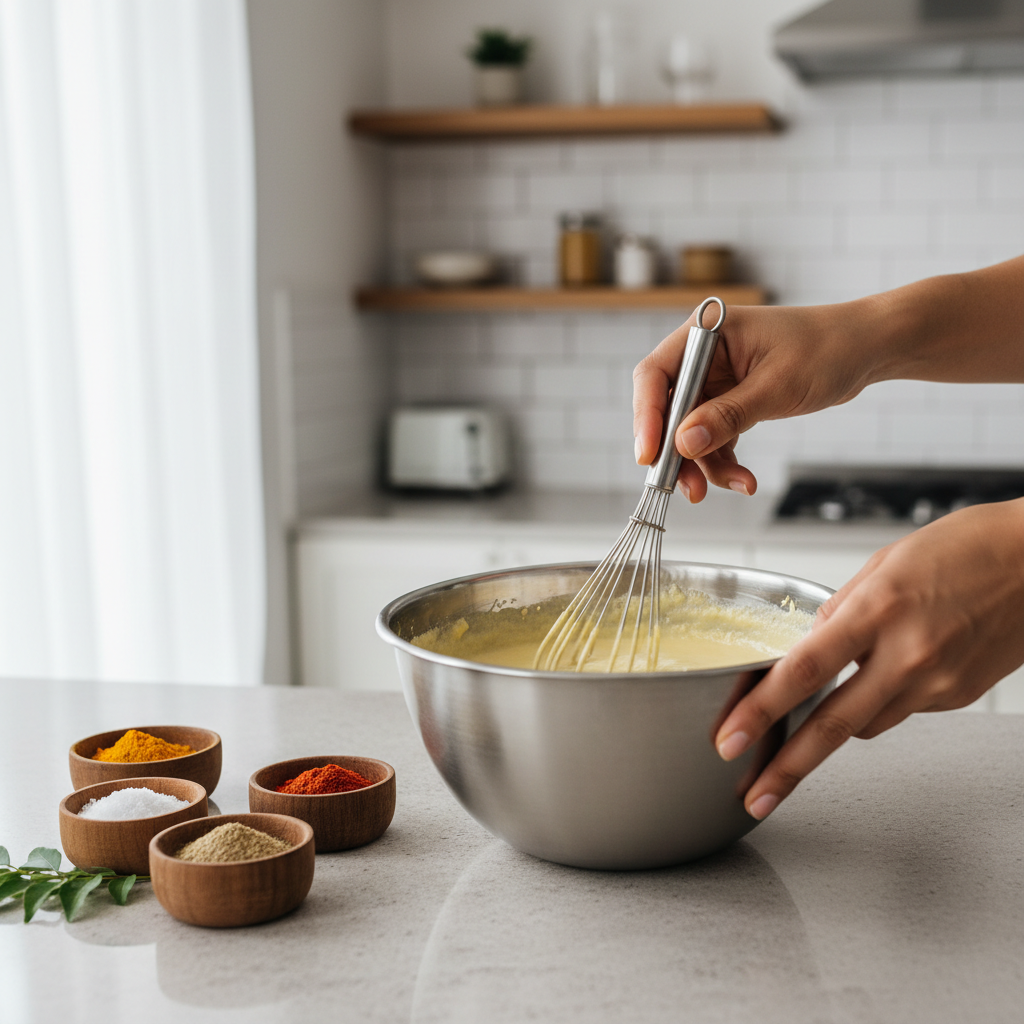
Step-by-Step: How to Make Punjabi Kadhi (Smooth, Not Split)
The easiest way to avoid splitting is to keep the slurry smooth, bring heat up gradually, and stir often early on.
1) Make a lump-free yogurt-besan slurry
- In a bowl, whisk yogurt + besan + turmeric + salt until totally smooth.
- Add water gradually while whisking, aiming for a thin, pourable consistency.
- If you see stubborn lumps, pass through a fine sieve. This step feels extra, but it saves the whole pot.
2) Build the base in a pot
- Heat 1–2 tbsp ghee or oil.
- Add cumin seeds, then onion (if using) and sauté until softened.
- Add ginger-garlic and a pinch of chili powder, stir briefly so it doesn’t burn.
3) Add slurry and cook it properly
- Pour in the slurry with the stove on low to medium-low, stirring constantly for the first 5–7 minutes.
- Once it warms through, bring to a gentle simmer, not a violent boil.
- Simmer 25–45 minutes depending on batch size, stirring every few minutes.
What you’re waiting for: the raw besan smell fades, the color turns a deeper yellow, and the texture becomes glossy. If it tastes “floury,” it needs more simmer time.
According to USDA, perishable foods like yogurt should not sit at room temperature for long periods; keep yogurt refrigerated until you’re ready to whisk the slurry, especially in warmer kitchens.
Step-by-Step: Pakoras That Don’t Turn Heavy
For how to make kadhi pakora recipe punjabi work in real life, pakoras should be flavorful on their own, because once they hit kadhi they mellow out.
Pakora batter (simple, dependable)
- In a bowl mix besan, salt, chili powder, turmeric, ajwain, and sliced onion.
- Add water a tablespoon at a time until you get a thick batter that clings to onion strands.
- Optional: add a tiny pinch of baking soda right before frying for a lighter bite.
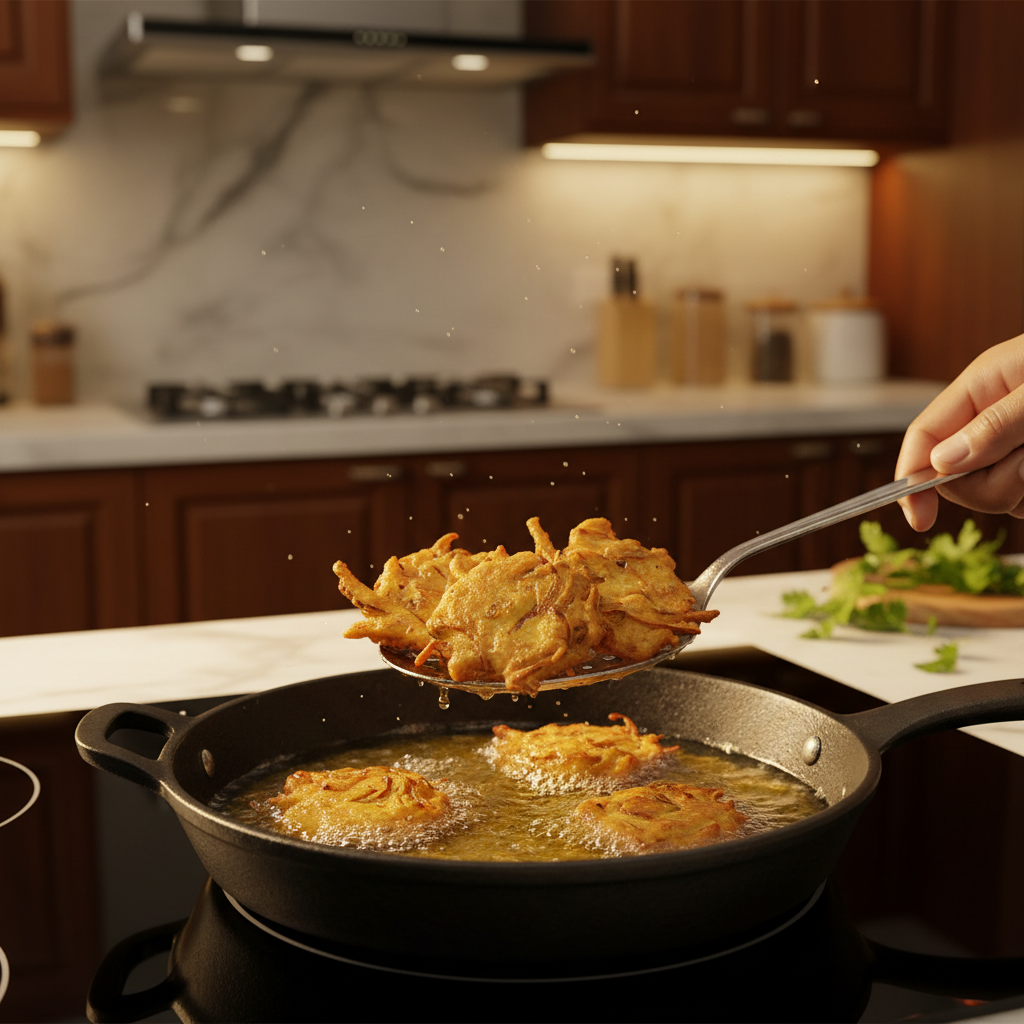
Frying tips that matter
- Oil temperature: medium. If it’s too hot, pakoras brown outside and stay raw inside.
- Don’t crowd the pan. Crowding drops oil temperature and turns pakoras oily.
- Fry until deep golden, then drain on a rack or paper towels.
If frying feels like a barrier, you can air-fry or bake pakoras, but texture changes. Many people accept that tradeoff, especially for weeknight cooking.
Putting It Together: When to Add Pakoras, How Long to Simmer
This is where many batches go sideways. If you simmer pakoras too long, they can dissolve at the edges. If you add them too late, the centers stay bready.
- Once kadhi tastes cooked and balanced, add pakoras and simmer 8–12 minutes.
- If you like them very soft, go up to 15 minutes, but keep the simmer gentle.
- For meal prep, store pakoras separately and add them during reheating. This keeps texture more intentional.
If the kadhi thickens too much after adding pakoras, loosen with hot water, not cold. Cold water can shock the pot and can make the gravy look slightly broken.
Tadka (Tempering) That Makes It Taste “Restaurant-Right”
Punjabi kadhi often tastes flat until tadka hits. This part is fast, but don’t rush the oil.
- Heat 1–2 tbsp ghee/oil in a small pan.
- Add cumin seeds and dried red chiles, let them sizzle until fragrant.
- Add a pinch of hing and curry leaves if using, then immediately pour over the kadhi.
Safety note: tempering can splatter, especially with curry leaves, so keep your face back and use a deeper pan if you have one.
Troubleshooting and Common Mistakes (Real-World Fixes)
Most “bad kadhi” is fixable. You just need the right diagnosis.
If your kadhi split or looks curdled
- Often caused by high heat early on or very sour yogurt. Lower heat and whisk more at the start next time.
- In the moment, you can try blending briefly with an immersion blender. It may not become perfect, but it usually improves.
If it tastes too sour
- Add a little more cooked besan slurry (whisk besan with water, simmer separately, then add) or simmer longer.
- A small pinch of sugar can round edges, but don’t make it sweet.
If it’s too thin
- Simmer longer uncovered. This is the cleanest fix.
- Or whisk 1 tbsp besan with water, add slowly, then simmer 10 minutes.
If pakoras got soggy fast
- That’s normal to a degree. For more bite, add pakoras right before eating.
- Make pakoras slightly thicker and fry to a deeper golden so they hold up longer.
Key takeaways: keep heat gentle early, cook besan long enough, and treat pakoras like a timed ingredient, not something you forget in the pot.
Serving, Storage, and Weeknight Shortcuts
Kadhi pakora usually lands best with steamed basmati rice, but it also works with roti or even a simple side salad if you want something fresh.
- Serve: with rice, a squeeze of lemon only if you truly need brightness, and extra tadka if you like bold flavor.
- Store: refrigerate 3–4 days in a sealed container. Reheat gently; hard boiling can stress the yogurt base.
- Make ahead: kadhi base on day 1, pakoras on day 2, combine while reheating.
If you’re trying how to make kadhi pakora recipe punjabi on a tight schedule, do a “two-pot” approach: kadhi simmers in one pot while you fry pakoras in a skillet, then combine near the end. The workflow feels calmer.
Conclusion: A Punjabi Kadhi Pakora You Can Repeat
The most reliable path to a good bowl is simple: whisk the slurry until smooth, cook the gravy long enough to lose that raw besan edge, and add pakoras with intention so they land at the texture you like.
Pick one improvement for your next batch, maybe a gentler simmer or a better tadka, then keep everything else the same so you can taste the difference. If you want, save the ratio table above and use it as your baseline.