
How to make coleslaw creamy crunchy comes down to one thing most recipes gloss over, water control, because cabbage releases moisture after you dress it, and that moisture is what turns “fresh and snappy” into “sad and soupy.”
The good news is you don’t need fancy ingredients or a long prep time, you need a few small technique upgrades, how you cut the cabbage, when you salt it, how you mix the dressing, and when you combine everything.
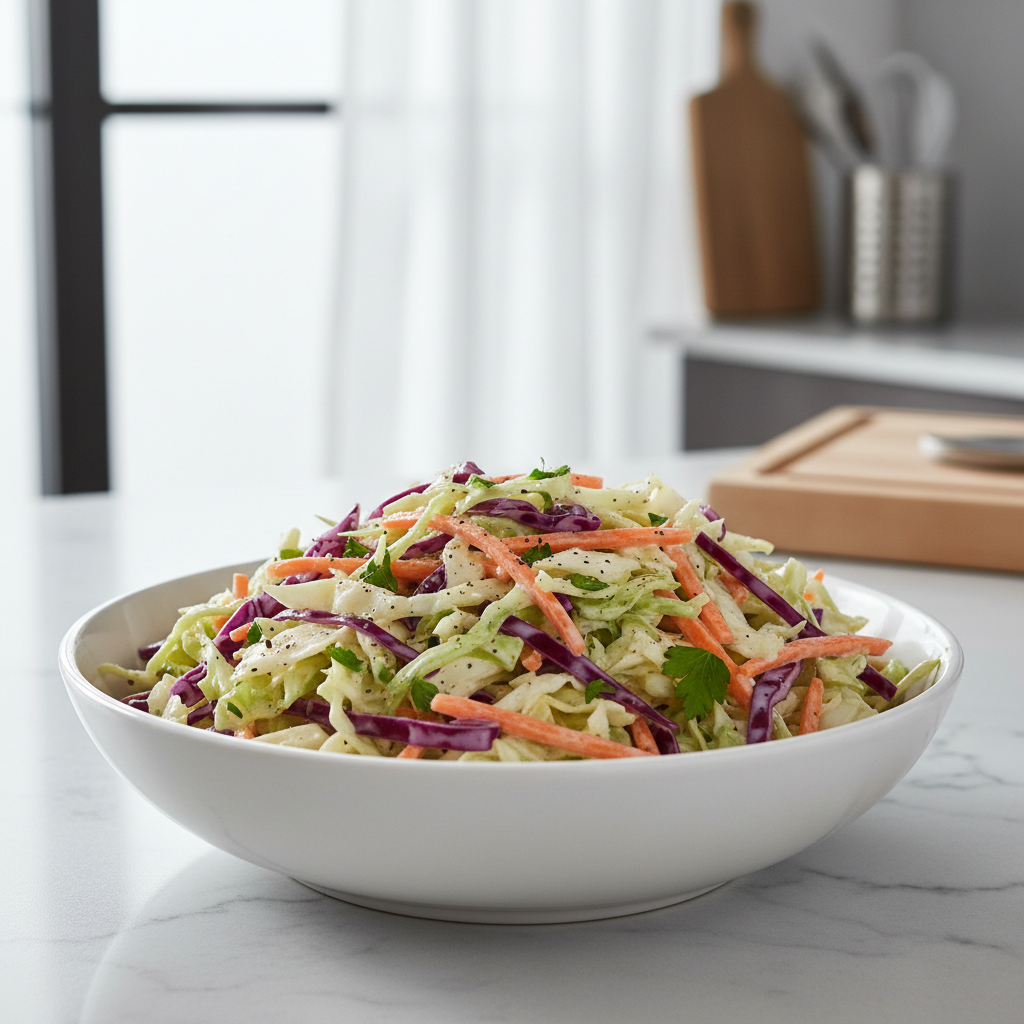
If you’ve ever followed a “classic coleslaw” recipe and still ended up with watery dressing at the bottom of the bowl, it’s usually not your mayo, it’s the cabbage. This guide walks you through a reliable, repeatable method, plus a few variations for cookouts, sandwiches, and meal prep.
What “creamy” and “crunchy” really mean in coleslaw
People often treat texture like an ingredient, but it’s a result. “Creamy” means the dressing clings in a thin, even coat instead of pooling, “crunchy” means the cabbage stays crisp after it sits for 15–60 minutes, not only at the first bite.
There are three common reasons slaw loses crunch fast:
- Too much surface area: finely shredded cabbage dumps water faster than thicker cuts.
- Dressing added too early: acid and salt draw moisture out, then the bowl floods.
- Weak emulsion: a thin dressing breaks once cabbage juice dilutes it.
Once you see it that way, the fix is straightforward, reduce water release, strengthen the dressing, then combine at the right moment.
Ingredients that help coleslaw stay creamy and crisp
You can make great slaw with basic grocery-store staples. What matters is choosing ingredients that support texture instead of fighting it.
Core vegetables
- Green cabbage: the backbone, sturdy crunch.
- Red cabbage (optional): extra snap and color, can bleed a little if cut very thin.
- Carrot: sweetness and texture, grate on the large holes.
For the dressing
- Mayonnaise: creamy base, use what you like, but avoid “whipped” styles if you want thicker cling.
- Sour cream or Greek yogurt (optional): adds tang and body, yogurt can be slightly looser.
- Apple cider vinegar or lemon juice: brightness, but keep it measured or it turns watery.
- Sugar or honey: balances acidity, also softens harsh cabbage bite.
- Dijon mustard: small amount helps emulsify and adds depth.
- Celery seed: classic deli-style note, a little goes a long way.
According to USDA FoodData Central, raw cabbage is naturally high in water, so the goal isn’t eliminating moisture, it’s managing when and how it shows up in your bowl.
The method: how to make coleslaw creamy crunchy every time
This is the workflow I’d bet on for picnics and pulled pork sandwiches, because it stays stable on the table and still tastes “fresh-made.”
Step 1: Cut for crunch, not confetti
- Slice cabbage into ribbons about 1/8 to 1/4 inch thick.
- Avoid ultra-fine shreds unless you plan to serve immediately.
- For carrots, use the large grater holes or matchsticks, not a microplane.
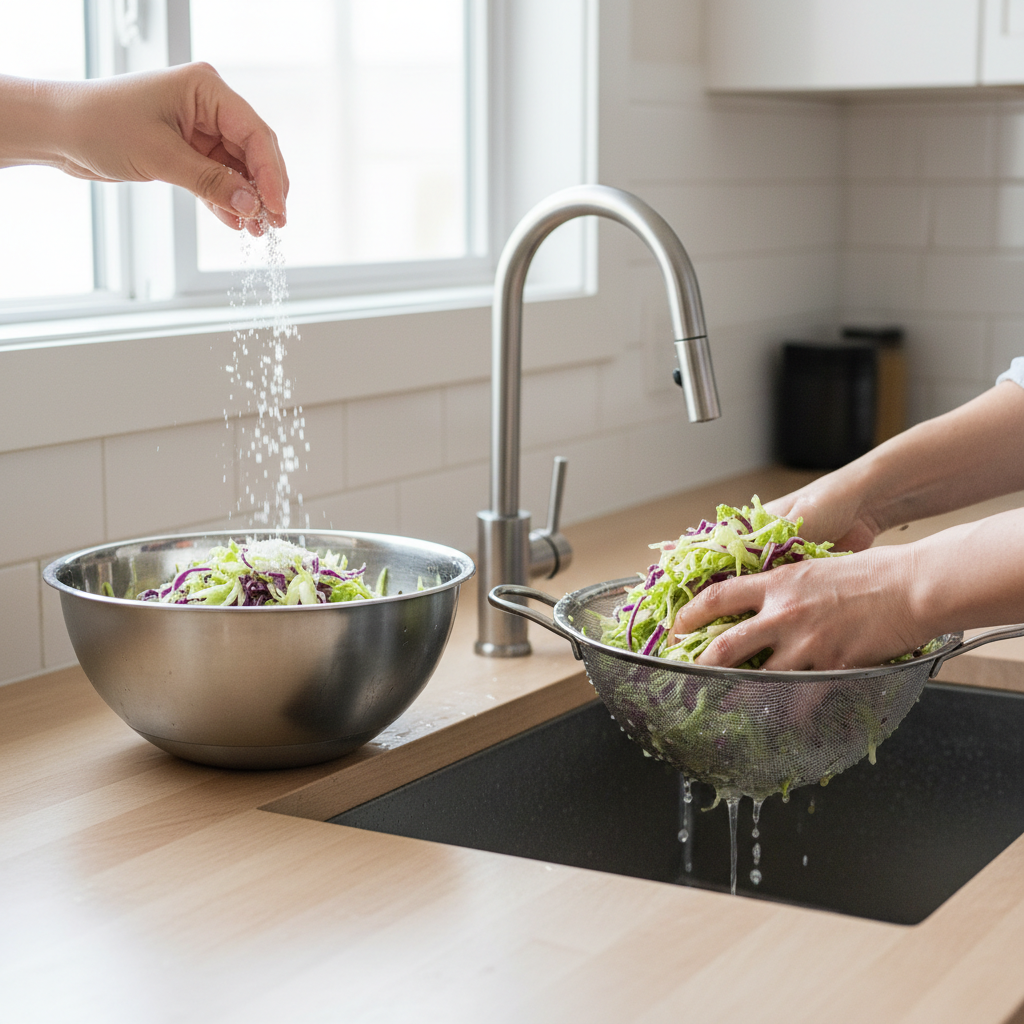
Step 2: Salt, rest, then drain (the “anti-soggy” step)
- Toss cabbage with 1 to 1 1/2 teaspoons kosher salt per 2 pounds cabbage.
- Rest 20–40 minutes, then squeeze gently by handfuls and drain well.
- Optional but useful: blot with a clean towel or paper towels.
This step feels fussy the first time, but it solves the main problem, you remove a portion of free water before dressing ever hits the cabbage.
Step 3: Mix a thicker dressing than you think you need
In a separate bowl, whisk until smooth:
- 3/4 cup mayonnaise
- 2 tablespoons sour cream or Greek yogurt (optional, helps body)
- 1 1/2 tablespoons apple cider vinegar
- 1 to 2 tablespoons sugar (to taste)
- 1 teaspoon Dijon mustard
- 1/2 teaspoon celery seed (optional)
- Black pepper, and salt only after tasting since the cabbage was salted
If it tastes a touch too punchy at this stage, that’s often correct, once it coats the vegetables it mellows.
Step 4: Combine gradually, then rest briefly
- Add cabbage and carrots to a large bowl.
- Spoon dressing in, toss, then reassess, you may not need every drop.
- Rest 10–20 minutes in the fridge for the flavors to settle.
That short rest gives you the “creamy” feel without sacrificing snap, and it’s the sweet spot for how to make coleslaw creamy crunchy without the watery puddle.
Quick self-check: why your coleslaw gets watery (and what it points to)
If your results still vary, run this quick diagnosis. It’s usually one or two small issues.
- Watery bottom after 30 minutes: cabbage wasn’t drained enough, or dressing was too thin.
- Soft cabbage but not watery: shreds too fine, or slaw sat too long dressed.
- Tastes flat: needs more acid or salt, add in tiny increments and taste.
- Tastes harsh: vinegar too high, or no sweet balance, add a little sugar or grated apple.
- Over-salty: salted cabbage plus salted dressing, next time salt only one place.
Timing guide: when to dress coleslaw for parties, sandwiches, and meal prep
Timing is the hidden lever. Make it fit your plan, not the other way around.
| Scenario | Best move | Why it works |
|---|---|---|
| Serving within 30–60 minutes | Dress fully, rest 10–20 minutes | Best flavor meld, crunch still strong |
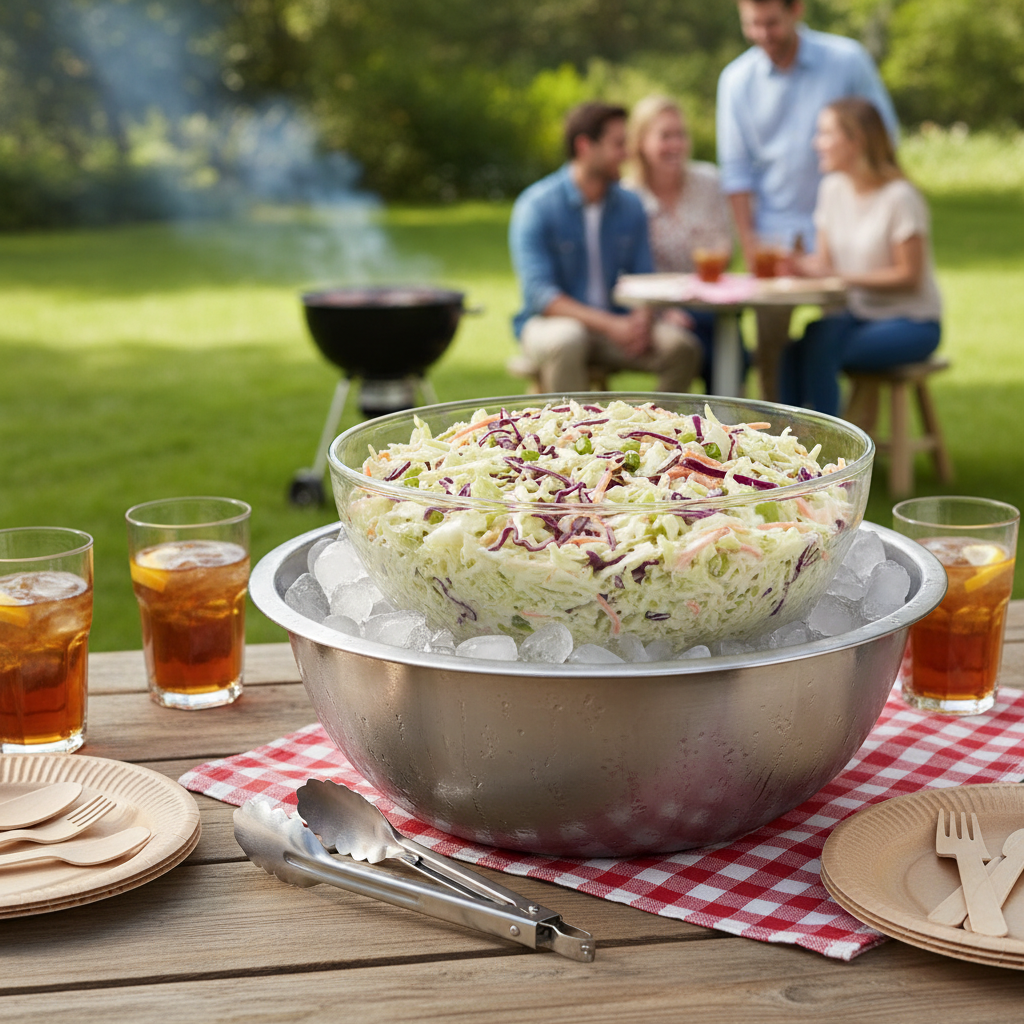
| Cookout (2–4 hours on and off the table) | Salt-drain cabbage, keep dressing separate, toss 30–60 minutes before | Reduces dilution as it sits |
| Sandwich bar (people build over time) | Make “lightly dressed” slaw, extra dressing on the side | Prevents soggy buns and keeps texture |
| Meal prep (next day lunch) | Use thicker cut, salt-drain, dress lightly, refresh with a spoon of mayo before eating | Maintains bite and creamy feel after refrigeration |
Food safety matters at gatherings. According to USDA Food Safety and Inspection Service (FSIS), perishable foods shouldn’t sit out longer than about 2 hours, and less in hot weather, so keep slaw chilled and bring out smaller bowls as needed.
Flavor add-ins that keep crunch (and ones that sabotage it)
Once texture is handled, add-ins become fun, but not all “extras” behave the same.
Crunch-friendly add-ins
- Thin-sliced scallions or chives
- Pickle juice in place of some vinegar, use small amounts for tang
- Grated apple added right before serving, for sweet crispness
- Toasted nuts sprinkled on top at the table
- Jalapeño for heat, keep seeds if you want more kick
Add-ins that often make slaw soggy
- Watery vegetables like cucumber or tomato mixed in early
- Fresh pineapple or very juicy fruit, it leaks fast
- Pre-salted shredded mixes dressed long before serving
If you want those ingredients, you still can, just fold them in right before serving and keep expectations realistic, they tend to soften the crunch.
Practical tips, common mistakes, and the “key points” to remember
This is where most people get tripped up, the recipe is fine, the handling isn’t.
- Don’t dress warm cabbage. If it sat in a hot car or near a grill, cool it first.
- Don’t overmix. Aggressive tossing bruises cabbage and speeds softening.
- Use a big bowl. Crowding leads to uneven dressing and more stirring.
- Adjust at the end. Add vinegar, sugar, or pepper after a short rest, not before.
Key points: cut thicker than you think, salt-drain for water control, whisk a clingy dressing, combine gradually, then give it a brief chill. That’s the core of how to make coleslaw creamy crunchy without relying on gimmicks.
Conclusion: your next batch should stay creamy, not watery
Once you treat cabbage like an ingredient that needs a little prep, coleslaw gets a lot more predictable, creamy dressing stays where it belongs, and the crunch lasts long enough for seconds.
If you make slaw often, try the salt-drain method twice before you judge it, then tweak cut size and dressing thickness to match how soon you serve. Next time you’re planning burgers or barbecue, set a timer for that quick rest, and you’ll taste the difference.