
If you want to learn how to make pesto sauce fresh basil without it turning bitter, brown, or oddly oily, the big levers are basil handling, the oil-to-herb balance, and how aggressively you blend.
Most pesto “fails” aren’t about talent, they’re about small choices that compound: warm basil, over-processed leaves, too much garlic, cheap cheese, or a blender that heats everything up. Fix those and pesto gets a lot more predictable.
This guide keeps it practical, with a few flexible ratios, a quick troubleshooting table, and storage moves that keep your pesto tasting like you made it today, not last week.
What “fresh basil pesto” should taste like (and what usually goes wrong)
Good basil pesto tastes bright, herbal, and nutty, with a gentle garlic bite and a salty, savory finish from cheese. Texture should feel spoonable, not gritty, not separated into a green paste sitting under a puddle of oil.
- Bitter pesto usually comes from over-blending basil, using older leaves, or too much garlic.
- Brown or dull green pesto often points to oxidation, warm blending, or storing without an oil seal.
- Watery pesto tends to be wet basil, low cheese, or adding oil too fast.
- Greasy separation can happen if there’s too much oil relative to solids, or if the mixture warms up.
According to the USDA, perishable foods should not sit at room temperature for more than 2 hours (or 1 hour if it’s hot). Pesto is full of “perishables” like cheese, so keeping your process efficient matters for both quality and food safety.
Ingredients that matter most (and smart substitutions)
You can make pesto with lots of variations, but if you’re chasing the classic Genovese vibe, start with a solid baseline and then tweak.
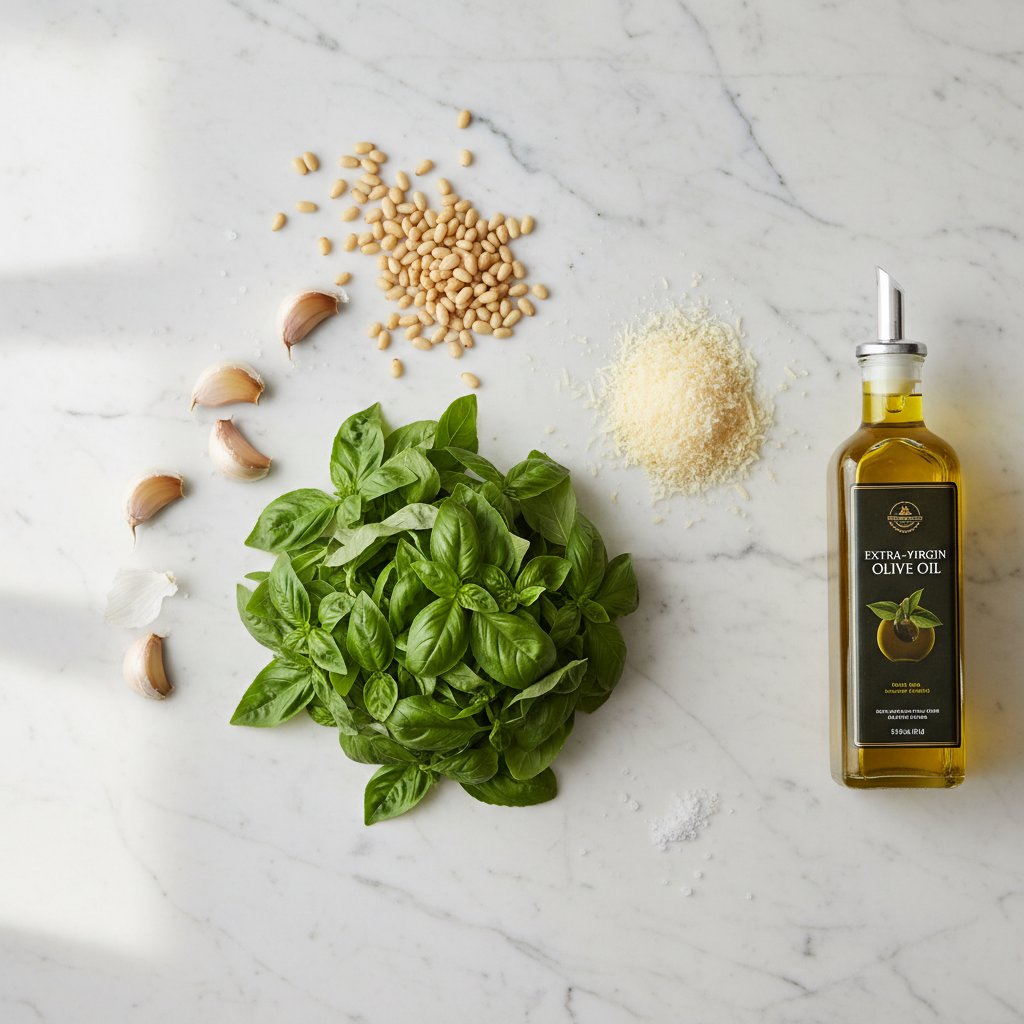
Core ingredients
- Fresh basil: Sweet basil is the classic. Choose leaves that look perky, not bruised or blackened.
- Olive oil: Extra-virgin gives fruitiness, but very peppery oil can read bitter once blended.
- Nuts: Pine nuts are traditional. Walnuts and almonds work, but shift flavor and bitterness.
- Cheese: Parmesan (Parmigiano-Reggiano style) adds clean salt and umami.
- Garlic: One small clove can be plenty, especially if it’s fresh and spicy.
- Salt: A pinch early helps the basil break down evenly.
Easy swaps (when the fridge says “no”)
- Pine nuts too pricey: try walnuts for deeper flavor, or slivered almonds for a lighter profile.
- No Parmesan: Pecorino Romano is saltier and sharper, use a bit less.
- Want it dairy-free: nutritional yeast can add savory notes, but the texture and salt curve change, adjust slowly.
One small reality check: substitutions can be great, but they also make troubleshooting harder. If you’re learning how to make pesto sauce fresh basil for the first time, do the classic version once, then riff.
The best ratios (with a quick reference table)
Pesto is more forgiving than baking, but having a ratio prevents most texture problems. Use this as a starting point for about 1 to 1 1/2 cups of pesto.
| Ingredient | Starter amount | Notes |
|---|---|---|
| Fresh basil leaves | 2 packed cups | Dry well, stems removed |
| Pine nuts (or nuts of choice) | 1/3 cup | Toast lightly for more aroma, cool fully |
| Garlic | 1 small clove | Add more after tasting, garlic intensifies |
| Parmesan | 1/2 cup, finely grated | Grate fine for smoother pesto |
| Extra-virgin olive oil | 1/2 cup, plus more as needed | Add gradually to control texture |
| Salt | 1/4 tsp, then adjust | Cheese adds salt too |
| Lemon juice (optional) | 1–2 tsp | Brightens and may help slow browning |
Key point: If your basil is very tender and aromatic, you often need less garlic and less oil than you think. Start conservative, then loosen at the end.
Step-by-step: how to make fresh basil pesto sauce
This method works with a food processor and keeps the pesto tasting lively. A mortar and pestle can be even better for texture, but the processor is the weeknight reality for most people.
1) Prep basil so it doesn’t water down your sauce
- Rinse basil quickly, then dry it very well. A salad spinner helps, paper towels work too.
- Pull off tough stems. Small tender stems are fine, thick ones can taste fibrous.
- If your kitchen is warm, chill the basil 10 minutes. Keeping it cool reduces oxidation and “muddiness.”
2) Build the base
- Add nuts and garlic to the processor, pulse until finely chopped.
- Add basil and salt, pulse in short bursts. Avoid long blending, that’s where bitterness can creep in.
3) Add cheese, then oil slowly
- Scrape down the sides, add grated Parmesan, pulse a few times.
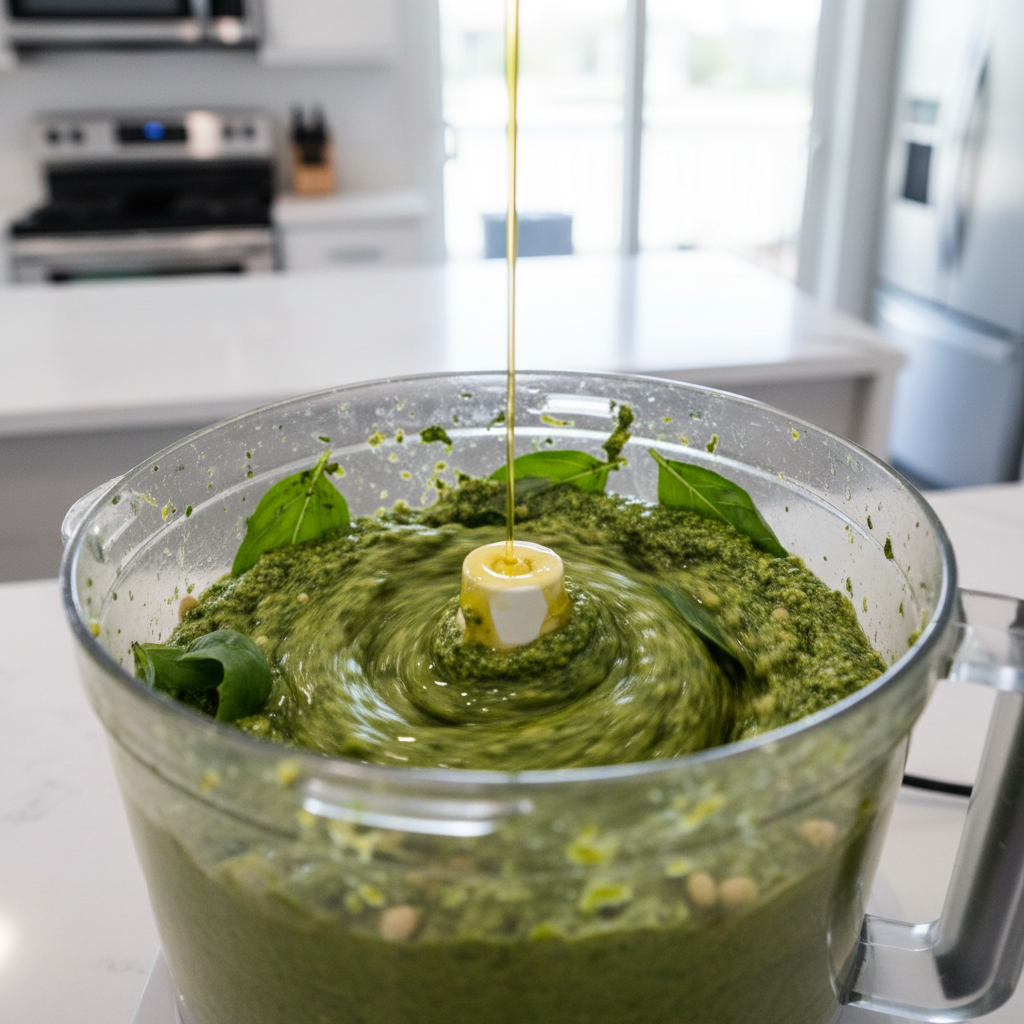
- With the machine running on low, drizzle olive oil in a thin stream until the pesto turns creamy and spoonable.
4) Taste and adjust like a cook, not a robot
- Too sharp: add a touch more nuts or cheese.
- Too thick: add oil 1 tablespoon at a time, or a splash of pasta water when serving.
- Missing “pop”: add a small squeeze of lemon, then re-taste.
That’s the core of how to make pesto sauce fresh basil in a way you can repeat. It should taste slightly intense in the bowl, because it mellows once tossed with pasta or spread on sandwiches.
Quick self-check: what kind of pesto problem do you have?
If your batch feels off, don’t toss it yet. Identify the dominant issue, then do the smallest fix.
- Bitter aftertaste: basil got bruised or over-processed, garlic too aggressive, oil too peppery.
- Looks brown: oxidation from air/heat, stored without an oil layer, basil already bruised.
- Too thick or pasty: not enough oil, cheese too coarse, basil packed too tightly.
- Too thin: basil not dried, too much oil added early, low cheese/nuts.
- Flat flavor: needs salt, cheese, or acid, sometimes all three in small amounts.
According to the FDA, food safety guidance emphasizes keeping cold foods cold and minimizing time in the “danger zone.” If your pesto sat out during a long prep session, consider chilling promptly and, if you’re unsure, err on the cautious side.
Fixes and serving tricks that make pesto taste restaurant-good
Most pesto gets better with one small “finish” step at serving time, especially for pasta.
For pasta: emulsify, don’t just dump
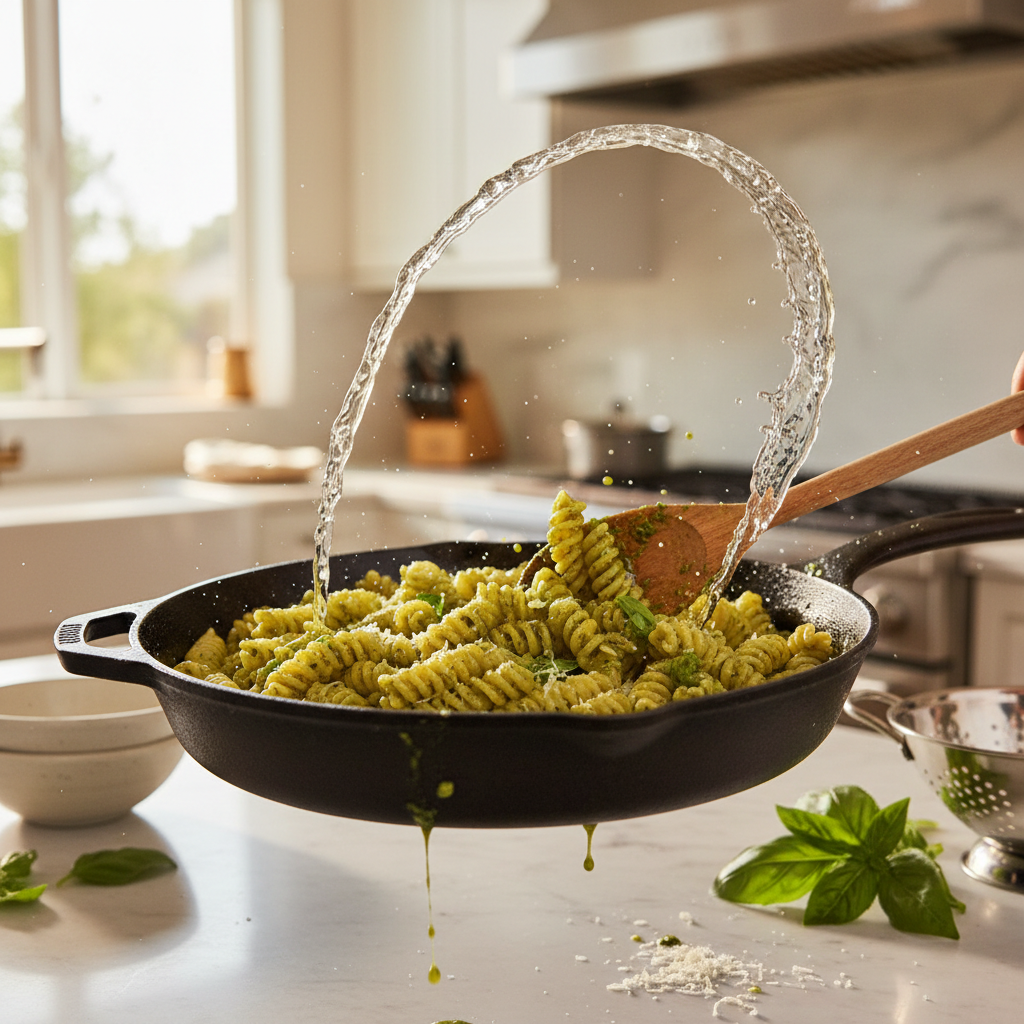
- Reserve 1/2 cup hot pasta water.
- Off the heat, toss pasta with pesto, then add pasta water a splash at a time until it turns glossy.
- If it tastes heavy, add a little lemon zest or a few drops of lemon juice.
For sandwiches and bowls: thin it on purpose
- Mix pesto with a spoonful of olive oil, yogurt, or mayo depending on the vibe.
- Add a pinch of salt after thinning, dilution can hide seasoning.
For chicken, fish, and veggies: use it like a finishing sauce
- Spoon pesto over hot food right before serving, heat blooms aroma.
- Avoid simmering pesto in a pan, that can mute basil and push bitterness.
Storage, freezing, and food-safety notes
Pesto tastes freshest the day you make it, but you can keep it in great shape for several days with a couple habits.
Fridge storage
- Press pesto into a small container to remove air pockets.
- Pour a thin layer of olive oil on top to reduce browning, then seal tightly.
- Use within a few days for best flavor. If anything smells “off,” don’t gamble.
Freezing (best option for peak-basil season)
- Freeze in ice cube trays for portioning, then transfer cubes to a freezer bag.
- Many cooks freeze without cheese and stir cheese in after thawing for a cleaner texture, but either way can work.
- Thaw in the fridge or in a bowl over cool water, not on the counter for hours.
If you’re serving pesto to someone who is pregnant, immunocompromised, or otherwise high-risk, it’s sensible to be more cautious with storage time and cross-contamination, and to consult a qualified professional if you need personalized guidance.
Key takeaways (read this before you start)
- Dry basil thoroughly, water is the silent texture killer.
- Pulse, don’t puree, over-processing can push bitterness and dull color.
- Add oil gradually so you can stop at the texture you want.
- Finish with pasta water for a silky sauce that clings.
- Store with an oil seal to slow browning and keep the top from drying out.
Conclusion: make it once, then make it yours
Learning how to make pesto sauce fresh basil is less about chasing a single perfect recipe and more about controlling a few variables: cool basil, gentle blending, and a balanced ratio of solids to oil. Once those are in place, you can tweak nuts, cheeses, and acidity to match what you’re cooking.
Your next move: make a small batch, write down what you changed, and save a few cubes in the freezer. That tiny bit of “future you” prep pays off fast on busy nights.